
Lake Grove Presbyterian Church - All rights reserved

Lake Grove Presbyterian Church, Lake Oswego, Oregon
Background sky
SearchContact Us
Menu, Worship , Care, Connect, Equip, Witness, About LGPC
Background Cross


Sunday Sermon

Background Cross


To download the text and/or audio file for this week's sermon, please go to the "Sermon Archive" page and follow the instructions you'll find there. To subcribe to our sermon podcast in iTunes please click here.

A RARE PAIR

Joy for the Journey, Part 6

June 1, 2008

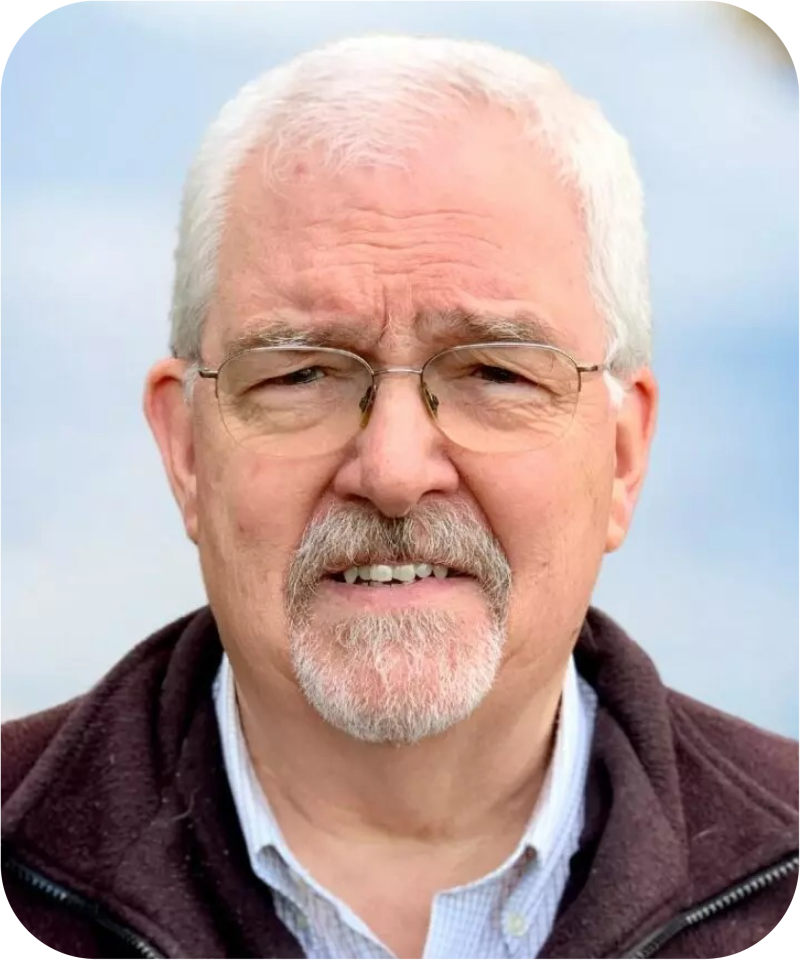
Pastor Bob Sanders

Audio Version of Sermon 


Philippians 2:19-30 (Today’s New International Version)

19 I hope in the Lord Jesus to send Timothy to you soon, that I also may be cheered when I receive news about you. 20 I have no one else like him, who will show genuine concern for your welfare. 21 For everyone looks out for their own interests, not those of Jesus Christ. 22 But you know that Timothy has proved himself, because as a son with his father he has served with me in the work of the gospel. 23 I hope, therefore, to send him as soon as I see how things go with me. 24 And I am confident in the Lord that I myself will come soon.

    25 But I think it is necessary to send back to you Epaphroditus, my brother, co-worker and fellow soldier, who is also your messenger, whom you sent to take care of my needs. 26 For he longs for all of you and is distressed because you heard he was ill. 27 Indeed he was ill, and almost died. But God had mercy on him, and not on him only but also on me, to spare me sorrow upon sorrow. 28 Therefore I am all the more eager to send him, so that when you see him again you may be glad and I may have less anxiety. 29 Welcome him in the Lord with great joy, and honor people like him, 30 because he almost died for the work of Christ. He risked his life to make up for the help you yourselves could not give me.

No One Is an Island

Pop quiz time.  Name that poet:  No man is an island, entire of itself.  Every man is a piece of the continent, a part of the main.

And the author is . . . the English poet and preacher, John Donne. 1  He wrote those words back in the seventeenth century, but they remain as true today as when they were first penned.  No one is an island; everyone is part of the main.  What happens to one of us touches all of us, for we are connected to one another, we’re made that way. 

Many of you remember Pastor Adama Diouf, our friend and partner in ministry in Senegal.  I heard him say something similar a few years ago when he was describing what life is like for the Wolof people of his country and he said, “I know how to kill a Wolof.  All you have to do is deprive a Wolof person from friendship, and he will surely die.”  Anyone who’s been to Senegal knows what he means.  For the Wolof living is all about relationships, all about community.  Wolof men and women cannot survive as isolated islands of humanity, disconnected from one another.  Each one is a piece of a larger continent, a part of the main.

I wouldn’t call the apostle Paul a Wolof, exactly.  But I would say Paul is a man with a passion for making and keeping deep friendships.  Some people have the idea that Paul was a loner, a first century Iron Man out there winning the world for Christ all by himself.  Or they think of Paul as cold and judgmental, more interested in theology than in real relationships.  But it’s not true.  The Paul we meet in the New Testament is neither a loner nor a cold fish.  He’s a man who loves people, who needs people, who surrounds himself with people.  Follow his ministry through the Book of Acts, and you’ll see he’s never a Lone Ranger.  He always travels and works with a team of people like Barnabas, Silas, Luke, Timothy, John Mark, and others.  Or look at his letters.  Whether he’s writing to Corinth or Rome or Philippi, he talks about specific men and women living in that community – real people whom he knows, whom he loves, whom he prays for by name.  Let’s take a closer look at what he has to say about two of these, two friends who have come to mean a great deal to him: a rare pair named Timothy and Epaphroditus.

Timothy

First, there’s Timothy.  In 1 Corinthians 4 Paul calls him “my beloved and faithful child in the Lord.” 2  Paul had led him to Christ, taken him under his wing, invested in him and mentored him.  They traveled together planting and building up many of the early churches.  He was Paul’s “go to” guy, his protégé, his most trusted colleague.  He frequently sent Timothy to different churches as his personal representative.  And that’s what Paul says he plans to do now – to send Timothy to encourage the church in Philippi and to bring Paul news on how they were doing. 

It says something remarkable about Paul that he could do that – step aside and let Timothy take over.  If you get a chance, see the movie “The Great Debaters” – the true story of how a debate team from a tiny black college in the South – Wiley College – wound up debating the world famous team from Harvard University.  There’s a wonderful scene where the lead debater of the Wiley team deliberately steps aside and lets a younger man, a less successful man, have his place and take the lead.  That younger man turns out to be James Farmer, who went on to become an important leader in the Civil Rights movement – in part because of the trust shown to him by this leader. 

So it says a lot for Paul that he would allow his protégé to take the lead.  And it says a lot for Timothy, because it’s not easy to be the protégé, the junior partner.  William Barclay says Timothy is “the patron saint of those who are quite content with the second place, so long as they can serve.” 31  Timothy exemplifies what Paul was talking about in the first part of this chapter, about “not looking to your own interests but…to the interests of others,” about having the mind of Christ, about setting aside your own rights and becoming a servant. 4   That’s Timothy.  Look at what Paul says about him in verses 20 and 21:

I have no one else like him, who will show genuine interest for your welfare.  For everyone looks out for their own interests, not those of Jesus Christ.

Timothy was the only one with a heart big enough to really care for the Philippians.  Everyone else was too busy, too wrapped up in their own family, their own career, their own concerns.  But not Timothy.  Timothy had room in his heart and time in his schedule for the people God had entrusted to his care. 

He reminds me of a woman named Henrietta Mears.  She wasn’t a famous preacher or leader of a well-known movement.  She was the head of the Sunday School at Hollywood Presbyterian Church during the 1950s, and she taught a college class – a class that produced some of the great leaders of the church for many years.  Someone once asked her how she came to have such a powerful influence on the lives of so many.  She said that when she spoke with another person she tried to imagine a sign hanging around that person’s neck, and the sign said, “Please make me feel important.”  And that’s what she did.  She made that person feel important not only to her, but important in the eyes of the Lord.

How easy it is for me to become so preoccupied with projects and programs that I fail to make time for persons.  A number of years ago I came across a book entitled The (Incomplete) Book of Failures.  The author was the president of an organization called “The Not Terribly Good Club of Great Britain,” and his book is a collection of stories about people “who were so bad in their chosen endeavors that their names live on as beacons for future generations.” 5  One of my favorite failures was a bus company in England that reported some of their buses would no longer stop for passengers along certain routes.  The company spokesman then made transportation history by explaining that if these buses actually stopped for passengers they would disrupt the timetable

Sometimes I wonder how many folks see the church like that bus company – orderly perhaps, efficient maybe, but with no time for people.  I wonder how many see you and me like that: too preoccupied with our own stuff to have any interest in theirs, too busy to have time to care.  A couple weeks ago I mentioned Dietrich Bonhoeffer’s great book Life Together, and I want you to hear what he has to say about being interruptible:

We must be ready to allow ourselves to be interrupted by God.  God will be constantly crossing our paths and cancelling our plans by sending us people with claims and petitions.  We may pass them by, preoccupied with our more important tasks, as the priest passed by the man who had fallen among thieves, perhaps – reading the Bible.  When we do that we pass by the visible sign of the Cross raised across our path to show us that, not our way, but God’s way must be done.  It is a strange fact that Christians and even ministers frequently consider their work so important and urgent that they will allow nothing to disturb them. 6

I have no one else like him,” says Paul, “for everyone looks out for their own interests, not those of Jesus Christ.”  You can see why Paul thought so highly of Timothy – and why he might have been just a little reluctant to send him on to Philippi.  A person who makes others feel important is a rare and wonderful gift.

Epaphroditus

The other person Paul mentions is Epaphroditus.  When the Philippians learned that Paul was imprisoned they raised some funds for his support and then called on this young man to be their missionary and to deliver it in person.  And the idea was for Epaphroditus to stay on there in the prison cell in Rome and be Paul’s helper. 

The only problem was that after he’d been there for a little while, Epaphroditus became sicker than a dog.  He just about kicked the bucket, and Paul wound up taking care of him.  You can bet that some of the Philippians were feeling pretty frustrated by this turn of events (“Some help he turned out to be”).  And I’m guessing Epaphroditus himself felt like a failure.  I remember the time I went to Senegal and promptly collapsed with a raging fever (which turned out to be appendicitis).  I lay there in misery thinking, “My church sends me halfway around the world to help people and I wind up so sick I can’t get out of bed.  Some help I turned out to be!” 

I suspect that’s how Epaphroditus was feeling.  And now he’s about to head home where he’ll have to face his family and friends in the congregation, and many of them are going to see him as a failure, a quitter.  But look at what Paul does to pave the way for him.  Paul takes on himself the whole responsibility for his early return, and he spells out how the folks in Philippi should receive this young man.  Look at verse 25:

I think it is necessary to send back to you Epaphroditus, my brother, co-worker and fellow soldier, who is also your messenger, whom you sent to take care of my needs. 

Now down to verse 29:

Welcome him in the Lord with great joy, and honor people like him, because he almost died for the work of Christ. He risked his life to make up for the help you yourselves could not give me.

He’s no quitter, says Paul.  He’s my brother, my co-worker, my fellow soldier.  Can you imagine what those words meant to Epaphroditus when they were read aloud to the entire congregation on a Sunday morning?  Welcome him with great joy, Paul says, and honor him because he risked his life for the work of Christ.  Don’t let him slip home and be ignored.  Make a big deal out of it.  Put on a parade for this returning hero who represented you in the dangerous duty in Rome.

I thought about that this last Memorial Day weekend.  I thought about the late 1960s and early 1970s when a lot of young soldiers and sailors and airmen came home from a very unpopular war in Vietnam.  As many of you can recall, there were no parades to welcome them, and very little recognition from the American public.  As a nation, we just wanted to forget Vietnam, get it behind us.  And so we forgot the soldiers we sent there on our behalf.  I thought about the terrible price so many of them suffered for that forgetfulness, and I pray it won’t happen to the men and women coming home from Iraq and Afghanistan. 

I also thought about a young man I knew years ago in Colorado – a tall, skinny, awkward 18-year-old named Mike.  Mike was sure God wanted him to serve in overseas missions, and couldn’t wait to get there.  Though a number of us counseled him to go to college, get some more life experience, get better prepared, Mike put together his own money and that of some church members willing to support him and headed out for Kenya to work with a mission agency there.  He lasted less than three months.  Physically ill, homesick, lonely and broke, he slipped home unannounced.  He saw himself as a failure and withdrew from all of us.  A few days later I got a call from the hospital.  Mike had tried to end his life by slashing his neck and his wrists.  Thanks to the doctors, he recovered physically, but he was never the same emotionally. 

The test of genuine Christian fellowship is how it treats its members who have suffered some kind of breakdown, who have not lived up to their own expectations or the expectations we put on them.  I believe there ought to be this cushion of grace between us as Christians, a cushion of grace that enables us to make allowances for each other’s weaknesses, failures, and needs. 

Yes, we are to hold people to be their best, to live lives worthy of the Gospel.  But, as I try to tell you from time to time, we have to realize that wherever we sit on a Sunday morning, we’re seldom more than five people away from a broken heart, someone who feels like Epaphroditus – like a failure, a loser.  No, it’s not obvious.  They’re not wearing a nametag.  We’re Presbyterians, for crying out loud, “the frozen chosen.”  And we’re Lake Oswegans, many of us.  We’re supposed to be healthy and happy.  So we keep our hurts well hid.  But don’t be fooled.  Right now, there’s a person seated very near to you who is hurting, someone whose marriage is in shambles, whose kid is in trouble.  Someone out of a job, out of hope, out of support.  Someone who’s struggling with depression or addiction.  Someone who’s facing a life-threatening illness. 

Maybe that person is you.  If so, I’m so glad you came.  It took courage to get here, and the Lord knows that.  Welcome.  It’s an honor to have you in this fellowship.

Let me ask the rest of us this question: Who’s your Epaphroditus?  He may be at home or at work; she might be here in the church or out there in the community.  It may be your spouse or your child, your colleague or your neighbor, your golf buddy or your walking partner.  Who’s your Epaphroditus?  What will it mean for you to see past the failures?  What will it mean for you to reach out and be part of what God is trying to do in that person’s life?  The grace you express may very well be what it takes to give that person the chance for a new beginning.

Invitation to the Table

No one is an island, remember?  We need one another – Paul and Timothy, Epaphroditus and the Philippians, John Donne and you and me.  And the place to begin, the place to get connected is here at this Table, this sacrament of grace.  Come and take broken bread and poured out juice.  Come and be reminded how much our Lord loves you, how much he was willing to pay to make you his own, how important you are to him. 

And as you come, bring someone else with you.  Bring that person the Lord has put on your heart this morning.  As we looked at Timothy and his care for others, perhaps you thought of someone who’s been there for you in your journey, someone who came alongside you and cared for you.  Come and give thanks for that person as you receive Communion. 

Or as we thought of Epaphroditus, perhaps the Lord brought someone to your mind who’s hurting, someone in need, someone who’s feeling like a failure this morning.  Come and pray for that person as you receive these tokens of grace today. 

Dear ones, I don’t know of any family or fellowship that was ever harmed by saying “Thank you” too much, or by hugging too often, or by telling each other “I love you” too many times.  But I do know a number of churches and families that have dried up and become brittle because of a lack of real affection among its members. 

Who are you loving these days?  Do they know it?  Who are you grateful for?  Have you told them? 

  1. 5 The quote appears in Donne’s Devotions Upon Emergent Occasions, Meditation XVII:  
    “No man is an island, entire of itself; every man is a piece of the continent, a part of the main.  If a clod be washed away by the sea, Europe is the less, as well as if a promontory were, as well as if a manor of thy friends or of thine own were.  Any man's death diminishes me, because I am involved in mankind; and therefore never send to know for whom the bell tolls; it tolls for thee.”
  2. 1 Corinthians 4:17.
  3. William Barclay, The Letter to the Philippians (Westminster, 1957), p.60.
  4. Philippians 2:4ff.
  5. Stephen Pile, The (Incomplete) Book of Failures (Plume, 1979).
  6. Dietrich Bonhoeffer, Life Together (Harper and Row, 1954) p.99.