
Lake Grove Presbyterian Church - All rights reserved

Lake Grove Presbyterian Church, Lake Oswego, Oregon
Background sky
SearchContact Us
Menu, Worship , Care, Connect, Equip, Witness, About LGPC
Background Cross


Sunday Sermon

Background Cross


To download the text and/or audio file for this week's sermon, please go to the "Sermon Archive" page and follow the instructions you'll find there. To subcribe to our sermon podcast in iTunes please click here.

PRAYER PARTNERS

Joy for the Journey, Part 1

April 20, 2008

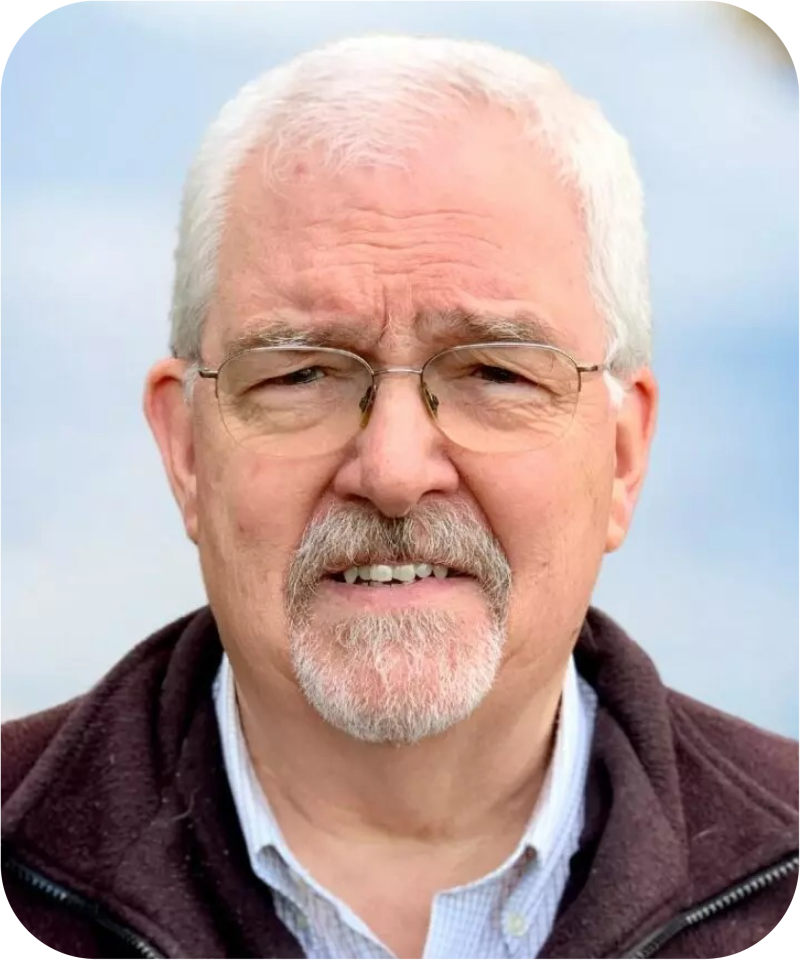
Pastor Bob Sanders

Audio Version of Sermon 


This morning we begin a new sermon series entitled Joy for the Journey.  From now till the end of June our focus will be on Philippians – the warmest and most affectionate of Paul’s New Testament letters.  Philippi was an important city in the region of Macedonia – what is now northern Greece – and the church there was founded by Paul on his second missionary journey (you can read about it in Acts chapter 16). 

These Philippian believers were some of Paul’s favorite people and you can’t miss the love and the joy he pours into this letter.  Especially the joy.  Even though Paul is writing from a prison cell and even though the believers in Philippi are facing some extremely tough times, joy is the dominant theme of this letter.  In its four brief chapters Paul uses the word joy six times and the word rejoice eight times.  As some of us have learned, joy does not mean the absence of pain or immunity from problems.  Joy means the presence of the Lord in the midst of that pain, in the midst of those problems.  The presence of the Lord – his power and his peace – that’s what gives us joy for our journey, even when the journey is painful, even when the going is tough. 

That’s what we’re seeking as we move through this remarkable letter: Joy for the Journey.  We begin at the beginning: Philippians 1:1-11.

Philippians 1:1-11 (TNIV)

1 Paul and Timothy, servants of Christ Jesus,
       To all God's holy people in Christ Jesus at Philippi, together with the overseers and deacons:
    2 Grace and peace to you from God our Father and the Lord Jesus Christ.
    3 I thank my God every time I remember you. 4 In all my prayers for all of you, I always pray with joy 5 because of your partnership in the gospel from the first day until now, 6 being confident of this, that he who began a good work in you will carry it on to completion until the day of Christ Jesus.
    7 It is right for me to feel this way about all of you, since I have you in my heart and, whether I am in chains or defending and confirming the gospel, all of you share in God's grace with me. 8 God can testify how I long for all of you with the affection of Christ Jesus.
    9 And this is my prayer: that your love may abound more and more in knowledge and depth of insight, 10 so that you may be able to discern what is best and may be pure and blameless for the day of Christ, 11 filled with the fruit of righteousness that comes through Jesus Christ—to the glory and praise of God.

* * * * *

So here’s Paul, chained to a pair of Roman guards in some dank, dark prison cell, unsure whether he’s going to live or die.  And here, hundreds of miles away, are these Philippian Christians whom Paul calls “God’s holy people” trying to live out their faith in an increasingly hostile environment.  As Paul writes them this letter, what’s the most important thing he can give them?  What do they need most of all?  Teaching on Christian doctrine?  Advice on getting along with their fellow Christians?  Maybe some tips on relating to their non-believing neighbors?  All that might be helpful, but that’s not where he begins.  For Paul, the first and most important thing he can do for these Philippians is – what?  Look at verses three through eleven: he prays for them.  Paul begins his letter with (of all things) a prayer. 

Unfortunately, for many of us today (including your pastor) prayer is generally the last thing we think of.  How many times have we heard people say, or we ourselves have said, “Well, all we can do is pray” – like that were some pious but pointless waste of time.  Not Paul.  For Paul the most important thing he can do for these struggling believers is lift them up before the throne of God and pray his gracious  help upon them.  

Prayer.  What kind of topic is that to preach on in a world like ours – a world torn apart by suicide bombings and food shortages, a world of economic uncertainty and political injustice?  In an election year, for crying out loud, who dares speak of something so irrelevant, so impractical as prayer?

We do.  Or at least, we should.  Because prayer is the extension cord that connects God’s transforming power with specific human need – the friend with cancer, the family member in crisis, the AIDS orphan in Zambia, the street kid in Senegal, the homeless family in Honduras.  As theologian Jacque Ellul has written,

Prayer goes with action, but it is prayer which is radical and decisive…. The Christian who prays acts more effectively and more decisively on society than a person who is politically involved with all the sincerity of his faith put into the involvement.

We live in an age when people pray small prayers and have limited expectations of God.  Perhaps they think God doesn’t really care about the world’s needs, or doubt his power to make a difference.  But Paul would say that the future belongs to the intercessors , to those who believe God is bigger than our problems and wants nothing more than to release his power for those who call upon him in faith.  I’m not talking about prayer that asks for easy answers or a more comfortable lifestyle.  I’m talking about prayer that brings before God the real problems of life, prayer that holds up before God the people in pain we care so much about. 

How do we learn to pray like that?  Phil Yancey in his book entitled Prayer suggests we use Paul’s prayers as a model for our own praying.  He writes:

Of Paul’s letters, all but Titus contain at least one prayer. . . I have found it a useful exercise to work through these prayers, because they help me move beyond my egocentric requests.  Paul prays as if it matters, truly matters whether [his readers] are maturing in the faith. . . His prayers expose by contrast the immature prayers I often hear at church meetings – and my own prayers – which tend to revolve around physical and financial well-being.

Yancey says Paul’s prayers give us a template for our own praying.  We can take a prayer like this one and make it our own by inserting the names of the people we care about, the needs we face in our own church, the crises in the world around us.  With that in mind, let me quickly point out three characteristics of Paul’s prayer for the Philippians, and how they might help us in our own praying.  If you’re taking notes, the three characteristics I’ll mention are gratitude, confidence, and expectation.

* * * * *

The first thing to notice is that Paul prays with gratitude.  Before he asks God to do anything, he gives thanks for what God has already done.  Before he brings up what’s lacking, what’s needed, he celebrates what’s already there, what’s good and healthy and blessed.  Is that how you begin your praying?  With thanks?  With deliberate gratitude for what God has been doing?  If you’re like me, you begin by bringing God a list of urgent problems.  You skip over the evidences of God’s gracious work all around you. 

Not Paul.  Look at how his prayer begins in verses 3-5:

I thank my God every time I remember you.  In all my prayers for all of you, I always pray with joy because of your partnership in the gospel from the first day until now.

Paul thanks God because these folks have been his partners in the Gospel from the very beginning.  They’ve partnered with him in bringing the good news of Jesus Christ into the dark and painful places of the world.  In his other letters Paul tells us that these Philippian Christians helped support him financially during his missionary travels.  And even now, as he is in jail awaiting trial for his life, the Philippians have sent one of their own members to stay with him and care for him, along with a generous financial gift to cover his needs.  He’ll say more about this later, but you can see he’s thinking about it in verses 7 and 8, when he says,

It is right for me to feel this way about all of you, since I have you in my heart and, whether I am in chains or defending and confirming the gospel, all of you share in God’s grace with me.  God can testify how I long for all of you with the affection of Christ Jesus.

Paul is in a tough spot, but he begins his praying with thanks.  Especially thanks for the people God has given him – people like the Philippians who stand by him, people whom he’s grown to love and long for with the affection of Christ Jesus.  Got any people like that in your life?  Have you thanked the Lord for them lately?  Have you told them, like Paul does, how much they mean to you?  What a difference it makes in our praying when we begin with thanksgiving for the grace and mercy God has already sent our way.

* * * * *

Paul prays with gratitude, that’s the first characteristic to notice.  And then notice how Paul prays with confidence, that’s the second.  Look at verse 6 – one of the most encouraging verses in all the New Testament.  You ought to underline this in your own Bible.  Write it on a note card and put it on your desk or refrigerator.  Memorize it and call it to mind as you go through the day.  Years ago I memorized this verse from the Revised Standard Version of the Bible:

And I am sure that he who began a good work in you will bring it to completion at the day of Jesus Christ.

Think about what that verse says.  It says that God himself began a good work in our lives when we first trusted in Jesus Christ.  It also says God isn’t finished with us yet.  We are all people in process.  God is still working on us – on our character, on our courage, on our compassion, and so much more.  It says God will complete the good work he began in us.  That is, God isn’t going to give up on us until the job is finished, until we’ve been formed into the image of Jesus Christ his Son. 

I need to be reminded of that truth.  I need to be reminded that God is still working on me – on my personality quirks, on my character flaws, on my blind spots.  I need to be reminded that one day, by God’s amazing grace, I really will be the person he wants me to be.  And that even now, in the struggles and challenges of this day, this week, he’s working to shape me into the image of his Son – to transform this frightened, grasping, self-absorbed sinner into a loving, joyful, confident saint.  I’m not finished yet.  That’s obvious to anyone who gets near me.  But that’s OK.  I’m not supposed to be finished yet.  I’m still in process.  And the One who began this good work in me has promised he will stay on the job.  He will bring it to completion.  In my case, it will undoubtedly take the rest of this life and well on into the next.  But God always finishes what he begins.

The same is true for those whom I love and pray for – my family, my friends, my mission partners, my church.  The God who began a good work in them will bring it to completion at the day of Christ Jesus.  It’s not a guarantee that all of life will go smoothly.  It’s not a promise that things will be easy.  It’s a promise that through the good as well as the tragic, through the happy times and the horrific times, God will never give up on them but will be at work in the lives of the people we care about.  I claim this verse so often when I pray for my wife and children, when I pray for our partners in Senegal and Zambia, when I pray for you, the congregation of my church.  I claim the promise that in his time God will finish the good work he’s begun in each of us. 

In the anthem the choir sang a few minutes ago we heard these lines:

Finish, then, Thy new creation;

Pure and spotless let us be;

Let us see Thy great salvation

Perfectly restored in Thee;

Changed from glory into glory,

Till in heaven we take our place,

Till we cast our crowns before Thee,

Lost in wonder, love, and praise.

* * * * *

Paul prays with gratitude.  Paul prays with confidence.  And lastly Paul prays with expectation.  Listen to verses 9 through 11 again:

This is my prayer: that your love may abound more and more in knowledge and depth of insight, so that you may be able to discern what is best and may be pure and blameless for the day of Christ, filled with the fruit of righteousness that comes through Jesus Christ – to the glory and praise of God.

Please notice Paul doesn’t pray God will make things easy for them.  Instead he prays God will grow their character and especially their compassion.  He prays that their love will abound more and more, along with their knowledge and insight and discernment.  In other words, that they will have soft hearts and hard heads.  Soft hearts of love for the needs around them, and hard heads of discernment on how best to meet those needs. 

Both are needed.  Compassion begins when our hearts are broken by the things that break God’s heart.  Some of you went to the AIDS Experience World Vision put on last weekend at Sunset Presbyterian Church and you had your heart broken a little bit, your love expanded.  But for compassion to be effective, to make a sustainable difference, things like knowledge and insight and discernment are needed.  That’s how Paul prays for these Philippians, and that’s how we ought to pray for this congregation, for its pastors and leaders, for our family members, for the folks around us this morning.  Gratefully, yes.  Confidently, certainly.  But also expectantly: for abounding love and expanded compassion, for deepening knowledge of God and sharpened discernment that recognizes what is best and rejects what is demeaning, to the end that we may be “filled with the fruits of righteousness that comes through Jesus Christ – to the glory and praise of God.”

When was the last time you prayed for somebody like that? 

* * * * *

I have a friend in southern California, a successful businessman, a loving father and devoted grandfather.  On the wall above the desk in his office is a bulletin board covered with pictures of his family.  I know him to be a very strong, self-disciplined man – a man with high personal standards and a tendency to sometimes impose those standards on his family members.  That’s why I was struck by the words on a small note card posted at the bottom of the bulletin board.  It says, “Criticism of others nails them to the past.  Prayer releases them into the future.”

That would be the way Paul sees it.  He doesn’t have a bulletin board, but he has these Philippian friends posted in his heart.  He is very disciplined and has high standards, but he’s learned to trust that God is at work for good in those he loves.  Rather than criticize them and nail them to the past, he prays for them and releases them into God’s future.

What about you?  Who are you praying for these days?  Who’s praying for you?  What a difference it would make in this congregation if more of us would regularly lift up one another, lift up the ministry of our church, lift up our partners around the world, praying with gratitude and with confidence and with expectation, trusting in this promise: “He who began a good work in you will bring it to completion in the day of Christ Jesus.”

  1. Quoted by John Robb in MARC Newsletter, Feb. 1999, p.5.
  2. As theologian Walter Wink notes, “History belongs to the intercessors who believe the future into being…. These shapers of the future are the intercessors who call out of the future the longed for new present.”  Quoted by John Robb in MARC Newsletter, op.cit.
  3. Philip Yancey, Prayer (Zondervan, 2006), p.177.
  4. Charles Wesley, “Love Divine, All Loves Excelling,” The Presbyterian Hymnal (Westminster/John Knox, 1990), p.376.