
 |
To download the text and/or audio file for this week's sermon, please go to the "Sermon Archive" page and follow the instructions you'll find there. To subcribe to our sermon podcast in iTunes please click here.
HEALING HANDS
Hands of Jesus, Part 5
March 9, 2008 – Fifth Sunday in Lent
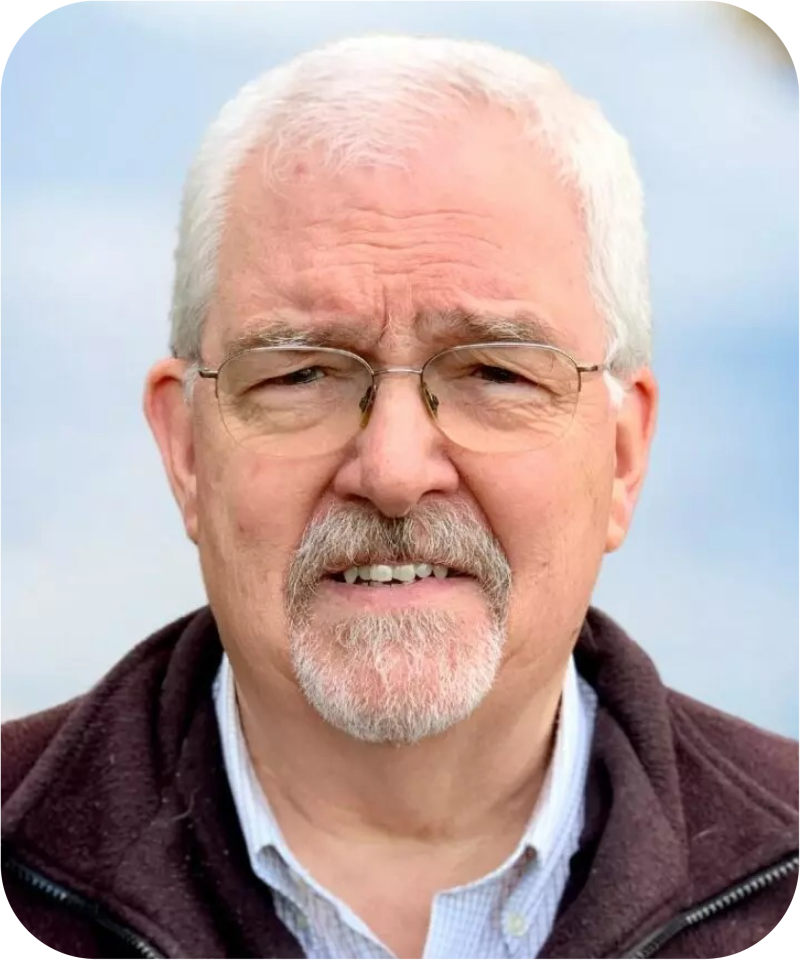
Pastor Bob Sanders
During this Lenten season we’re looking at the hands of Jesus. We’re studying what he does with his hands and what that tells us about his character. We’ve talked about how they’re willing hands, strong hands, blessing hands, saving hands. And throughout the Gospels we see them to be healing hands. The power of God flowed through them to heal bodies, minds, and spirits. And as we’ll see, Jesus was someone people wanted to touch and be touched by. Listen to this story from the Gospel of Mark, chapter five, beginning at verse twenty-one:
Mark 5:21-43 (TNIV)
21 When Jesus had again crossed over by boat to the other side of the lake, a large crowd gathered around him while he was by the lake. 22 Then one of the synagogue leaders, named Jairus, came, and when he saw Jesus, he fell at his feet. 23 He pleaded earnestly with him, "My little daughter is dying. Please come and put your hands on her so that she will be healed and live." 24 So Jesus went with him.
A large crowd followed and pressed around him. 25 And a woman was there who had been subject to bleeding for twelve years. 26 She had suffered a great deal under the care of many doctors and had spent all she had, yet instead of getting better she grew worse. 27 When she heard about Jesus, she came up behind him in the crowd and touched his cloak, 28 because she thought, "If I just touch his clothes, I will be healed." 29 Immediately her bleeding stopped and she felt in her body that she was freed from her suffering.
30 At once Jesus realized that power had gone out from him. He turned around in the crowd and asked, "Who touched my clothes?"
31 "You see the people crowding against you," his disciples answered, "and yet you can ask, 'Who touched me?' "
32 But Jesus kept looking around to see who had done it. 33 Then the woman, knowing what had happened to her, came and fell at his feet and, trembling with fear, told him the whole truth. 34 He said to her, "Daughter, your faith has healed you. Go in peace and be freed from your suffering."
35 While Jesus was still speaking, some people came from the house of Jairus, the synagogue leader. "Your daughter is dead," they said. "Why bother the teacher anymore?"
36 Overhearing what they said, Jesus told him, "Don't be afraid; just believe."
37 He did not let anyone follow him except Peter, James and John the brother of James. 38 When they came to the home of the synagogue leader, Jesus saw a commotion, with people crying and wailing loudly. 39 He went in and said to them, "Why all this commotion and wailing? The child is not dead but asleep." 40 But they laughed at him.
After he put them all out, he took the child's father and mother and the disciples who were with him, and went in where the child was. 41 He took her by the hand and said to her, "Talitha koum!" (which means "Little girl, I say to you, get up!"). 42 Immediately the girl stood up and began to walk around (she was twelve years old). At this they were completely astonished. 43 He gave strict orders not to let anyone know about this, and told them to give her something to eat.
As we said last week, sooner or later everybody gets hit with some kind of storm, some kind of struggle or difficulty (and if it’s not us, it’s someone we love, someone we’d gladly trade places with, if we could). Sometimes we get hit with a storm that’s just too painful, too overwhelming for us to. Disease, death, divorce, depression (to name just a few). A number of us in this room today are facing something like this, something that seems overwhelming, unbearable.
In our Gospel reading two very different people are each confronted by that kind of storm, something far greater than they can handle. First there is this man named Jairus, a leader of the synagogue. He’s an important man, a respected man, a man of means. But none of that matters right now because his little girl, his twelve-year-old daughter is on the brink of death. There’s nothing as painful for a parent as that, as some of us know. And that’s the storm Jairus is up against.
And there is this nameless woman. Along about same time Jairus welcomed his little girl into the world, this woman began to hemorrhage. For twelve years she has suffered. Her condition has left her physically drained and anemic. It’s also left her socially and emotionally isolated. She’s an outcast, a pariah. She’s not allowed to enter the synagogue or have contact with other people. She has no family and no money. She’s spent all she had on medical treatments, but nothing has worked. I know some of us can identify at least in part with what this woman has been going through – the pain, the loneliness, the expense of long-term debilitating illness.
Mark brings these two people together because, different as they are, they teach us the same truth, and that is that we can trust Jesus even in the worst storms, even in the crises that overwhelm us. I was talking with one of you last week about trust – what it means, why it’s so hard. We both agreed we have a lot to learn about what it means to really trust the Lord, especially in the tough times. And that’s what I think this story is all about: trusting Jesus for the things that are too big for us, too overwhelming, because nothing is too big or too overwhelming for him, not even death. I want to share with you three things from this passage, three truths about what it means to trust the Lord in the really tough times.
In Spite of the Obstacles
The first truth is this: these two people teach us that we trust the Lord when we come to him in spite of the obstacles. Both Jairus and the woman come to Jesus with their needs. Trusting Jesus means we come to him. That sounds obvious, but sometimes it’s very hard to do because certain obstacles get in the way. Like what? Look at some of the obstacles these two very different people had to overcome.
As a leader of the synagogue, Jairus was part of the religious establishment and by this time Jesus and the religious establishment were not getting along (to put it mildly). Many religious leaders were plotting to kill him. Who know? It might have been in Jairus’ own synagogue that Jesus sparked such controversy by healing a man on the Sabbath. In that case, Jesus and Jairus have already gone head to head. But intense pain has a way of reshaping our priorities. His daughter is dying, so Jairus swallows his pride and comes to Jesus. He comes publicly, in full view of the crowd. And he comes humbly, falling at Jesus’ feet.
The woman faced obstacles too. By Old Testament standards she was considered unclean. She was supposed to keep her distance from everybody, because if she touched anyone or anyone touched her, that person would also be unclean and excluded from worship or any community gathering for a period of time. To be in that crowd meant risking not just shame and exposure but even death by stoning if she’s discovered. That’s why she approaches Jesus in secret. She thinks, “No one will know. I’ll sneak up and touch his cloak.”
There are two obstacles that keep us from coming to Jesus. Either we’re too important, like Jairus, or we’re too unimportant, like this woman. For some of us, like Jairus, it’s a matter of pride. We think, “Whatever happens, I can handle it myself.” We’ve been successful in our work. We’ve made a good living. We’ve raised children who went to the right schools and never got in trouble with the law. Sure, there have been some bumps along the way, but nothing we couldn’t handle. Folks like this often have the illusion of being adequate and in charge. Their sense of control never gets seriously shaken, and so they do not come to Jesus.
But then the crisis hits. What do you do when your child, the joy of your life, lies close to death? At that point some people want to come to the Lord, but they think, “It would be hypocritical for me to come to him now. I’ve never turned to him before, so I can’t go to him now for help in this crisis.” But that didn’t stop Jairus, and it shouldn’t stop you, either. Jesus didn’t turn this man away because he’d ignored him up to this point. He welcomed him, no questions asked.
But others respond like this woman. They stay away from the Lord out of a sense of shame. They feel unclean, unworthy. They only feel safe with people who have a similar problem. For them the church is not a safe place because everyone in church looks like they have it all together. They don’t know how you’re supposed to act in church, and like this woman they’re afraid they might say something wrong. They’re afraid they might be found out and shamed. So they stay away.
For some it’s our pride. For others it’s our shame. Whatever it is, don’t let it keep you from Jesus. We trust him in the crisis by coming to him no matter what the obstacles.
Let Him Heal Us in His Own Way
The second thing we learn is that trusting Jesus means letting him heal us in his own way. We see this especially in what happens with this woman. At first it looks like she’ll get away with her plan. She manages to get close enough to put out her hand and touch his cloak. Immediately she feels her body respond. The flow of blood stops. She is healed. She’d love to shout for joy but she can’t risk it. So she slinks away, trying to get lost in the crowd.
And then she hears the words, “Who touched my clothes?”
Why would he say that? The disciples shake their heads and say, “In this crowd? You’ve got to be kidding, Jesus.” But Mark tells us in verse 30 he “realized that power had gone out from him.” By the way, I think this explains why sometimes Jesus got so exhausted. We forget the physical toll his ministry took on him. Yes, he was the Son of God and, yes, the power of God resided in him. But he was also fully human, and when that power flowed out of him, he noticed it. It drained him. No matter who you are, doing ministry in the power of God always costs you something. Even Jesus got tired.
But why ask out loud, “Who touched me?” Why single her out and risk exposing what she’d done? Why not a wink and a nod and let her go? The answer is, Jesus cares too much for her to do that. The healing he wants to give goes deeper. It wasn’t his cloak that healed her. He isn’t some kind of slot machine for miracles. Healing isn’t mechanical. It’s personal. Jesus wants to meet her, to know her. He wants a relationship. But that to happen, she has to answer. She has to identify herself.
For her, this is the moment of truth. She could have slipped away and remained anonymous. But she comes and falls at his feet, trembling with fear. She told him “the whole truth.” Twelve years of pain gushed out of her. She told him about all the doctors she’d seen, all the money she’d spent, all the humiliation she’d endured. She told him how she’d sneaked up and touched him, and how at that moment she’d been healed. The whole truth.
Can you imagine the reaction of the crowd standing there and hearing this? Suddenly they’re all wondering if they’d rubbed shoulders with her. They’re murmuring to each other, “Who knows how many people this woman contaminated in the last ten minutes?” But before panic starts rolling, Jesus does this amazing thing. He turns to her and says, “Daughter…” When was the last time anybody called her that? “Daughter, your faith has healed you. Go in peace and be freed from your disease.” Think about this. If she had not come forward and identified herself, she would not have heard these words. No one else would know she’d been healed. But now she has Jesus’ own word. She is a daughter of Sarah and Abraham, and she belongs in the community of faith.
It’s one thing to come to Jesus. It’s quite another to let our deepest needs be known to him and to others. Most of us are like this woman. We’d much rather remain anonymous and sneak away with the blessing of Jesus without having to come forward and tell the whole story. But the healing Jesus brings goes deeper. Sometimes it’s physical healing. Sometimes it’s emotional or spiritual. Sometimes it’s at the level of our closest relationships. Sometimes it’s all about the stuff we’ve stored up inside – the anger and resentment, the fear and loneliness, the guilt and shame. Sooner or later Jesus calls each of us to come forward and trust him with the whole truth. It’s painful. But that’s where the healing begins. I wonder if that’s where you are this morning.
Hanging On When He Delays
We’ve said trusting Jesus means coming to him despite the obstacles. We’ve said it means letting him heal us in his own way. The third thing we learn from this story is that we trust Jesus by hanging on when he delays. Look at Jairus again. He comes to Jesus with this desperate need, and Jesus listens to him and then follows him to his home. But then there's this large crowd pressing around them – a first-century traffic jam. And Jairus is thinking, “Don’t these people know my daughter is dying?” And then Jesus stops and says, “Who touched me?” In a crowd like this – who wasn’t touching him? And then he waits for this woman to come forward and listens to her story of twelve years of suffering. Picture poor Jairus standing there, tearing his hair out in frustration and thinking, “Come on, Jesus, I was here first!” But Jesus seems in no hurry. He gives this woman his complete attention as she rambles on and on.
And then some people come running to Jairus. He can tell what’s happened by the tears in their eyes and the pain on their faces. “It’s too late,” they say. “Your little girl has died.”
And just as Jairus starts to crumple, Jesus grabs him by the arm. Pulling him back from the messengers Jesus looks him in the eye and says, “Don’t be afraid; just believe.”
There’s a word-play here that doesn’t show up in the English translation. He just said to the woman, “Your faith has healed you.” Now he says to Jairus, “Just believe.” In Greek, the noun for faith and the verb to believe are the same root word. Jesus says to this woman “Daughter, your faith has healed you.” And now he tells Jairus to have that same kind of faith regarding his daughter. Maybe Jesus even nodded his head briefly toward the woman as he said this to Jairus: “Do what she did – believe.”
They reach the house, get rid of the weepers and wailers, and Jesus goes with the grieving parents to the girl’s room. And now we see his hands at work again. Taking her cold little hand in his, he spoke to her in Aramaic, “Talitha koum” (“Little girl, get up!”). And she opened her eyes, smiled at her daddy and mama, and immediately started text messaging her friends. No, it doesn’t say that. It says she began walking around (she was twelve years old, you know). Her parents were in a daze, and Jesus had to give them a word of practical advice: “You might want to give her something to eat.”
Sometimes we bring our deepest needs to Jesus. Like Jairus, we fall at his feet and plead earnestly for help. Sometimes he answers right away. But sometimes he delays. And we wonder, “What is he doing? Has he forgotten about me?” I confess this is the hardest part of this message for me. I want God to heal in the time and in the way I want healing. And I’ve been praying for some people for a long, long time. In some cases, I’ve seen evidence of healing and change. In other cases, nothing seems to have happened. And in still other cases, things seem to have gotten worse. What does it mean? Is there something the Lord wants me to discover, something he’s trying to teach me in this delay?
At times I’ve been asked to lead a healing service for folks in this congregation, and I’m always glad to do this. We gather with family and friends and lay hands on the person who is ill and we earnestly ask God to heal. But we have to understand that that God can answer our prayers in one of at least four different ways. One, God could answer by bringing instant healing. Or, two, God could use the powers of medicine and bring a measure of healing over a period of months and years. Or, three, God could allow the disease to continue, just as he did with the apostle Paul, but give sufficient grace to live with it, to be a living reminder that God’s power is made perfect in weakness. Or, four, God could call the person home, and thereby provide the ultimate healing – which is to leave this life and to go be with the Lord. God could answer our prayer for healing in any of these ways.
Guess which answer most of us want?
A number of years back I was sitting in a room listening to a speaker named Joe Bayly. Joe and his wife had endured the death of three of their sons to an incurable disease. He was one of the wisest, kindest, most faithful men I’ve ever met. He’s gone to be with the Lord now, but I will never forget something he said. He was talking about these tough times and he said something like this, “I don’t have all the answers as to why God allows us to suffer, why God doesn’t answer our prayers right away. But I do know this: nothing comes into our lives that has not first passed through the hands of our loving Lord. Nothing.”
Keep your eye on those hands. We don’t know why things happen the way they do. But nothing comes into our lives that has not first passed through those strong, saving, healing hands.
“Don’t be afraid,” he keeps telling us, “but trust me, no matter what.”
And that means coming to him in spite of the obstacles, not letting pride or shame keep us from him. It means letting him heal us in his own way, opening up and letting him change us from the inside out. And it means hanging in there even when we have to wait, even when he delays, even when it looks like he’s forgotten us. He hasn’t, you know. He hasn’t forgotten you. He’s still very much there, and he will do what is right with you and with me and with those we love.
Keep coming to him, as often as you need. Keep letting him work in his own way. And keep waiting. I promise you, you’re not the only one.
In the name of the Father, and of the Son, and of the Holy Spirit. Amen.
|
 |