Lake Grove Presbyterian Church - All rights reserved

Lake Grove Presbyterian Church, Lake Oswego, Oregon
Background sky
SearchContact Us
Menu, Worship , Care, Connect, Equip, Witness, About LGPC
Background Cross


Sunday Sermon

Background Cross


To download the text and/or audio file for this week's sermon, please go to the "Sermon Archive" page and follow the instructions you'll find there. To subcribe to our sermon podcast in iTunes please click here.


FREELY RECEIVE – FREELY GIVE

Stewardship 2007, Part 1

November 4, 2007

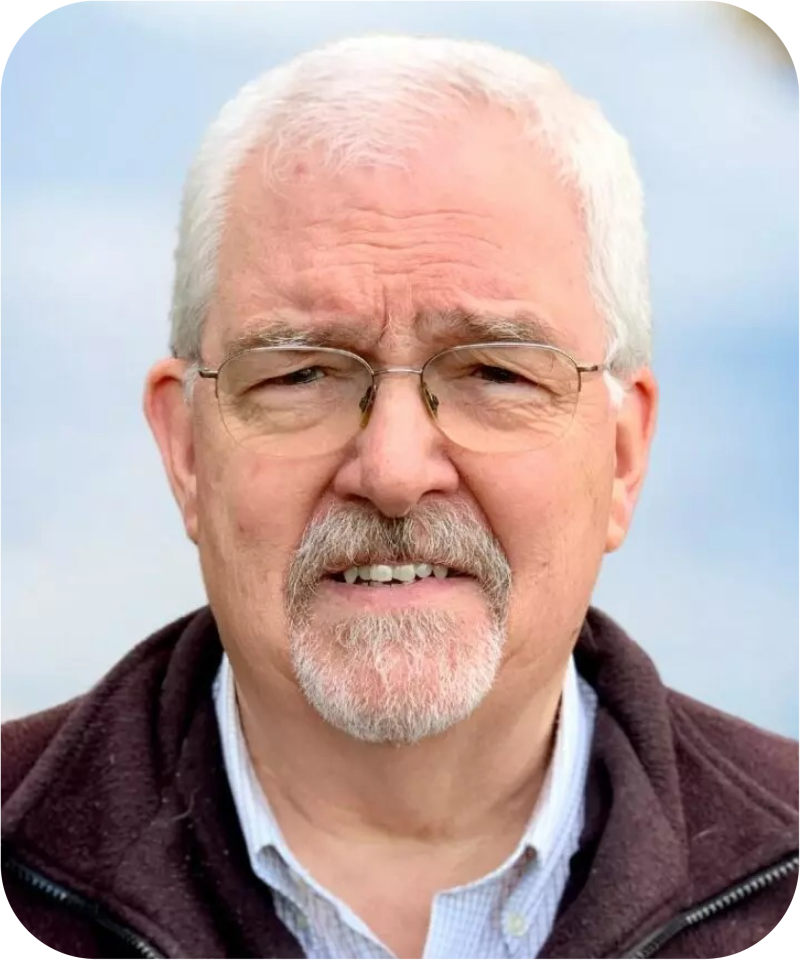
Pastor Bob Sanders

Audio Version of Sermon 


Matthew 10:1-8 (TNIV)

1 Jesus called his twelve disciples to him and gave them authority to drive out evil spirits and to heal every disease and sickness.

2 These are the names of the twelve apostles: first, Simon (who is called Peter) and his brother Andrew; James son of Zebedee, and his brother John; 3 Philip and Bartholomew; Thomas and Matthew the tax collector; James son of Alphaeus, and Thaddaeus; 4 Simon the Zealot and Judas Iscariot, who betrayed him.

5 These twelve Jesus sent out with the following instructions: "Do not go among the Gentiles or enter any town of the Samaritans. 6 Go rather to the lost sheep of Israel. 7 As you go, proclaim this message: 'The kingdom of heaven has come near.' 8 Heal the sick, raise the dead, cleanse those who have leprosy, drive out demons. Freely you have received, freely give.

Tangibilitate Your Faith

You may remember the story about the two men who were shipwrecked on a desert island.  The minute they got to the island one of the men started freaking out and yelling, “We’re going to die!  We’re going to die!  There’s no food!  No water!  We’re going to die!”

The second man wasn’t flustered at all.  He leaned back against a palm tree and gazed patiently out over the ocean.  In fact, he was so calm it drove the first guy even more crazy.  “Don’t you understand?” he shouted.  “We’re lost!  We’re going to die!”

The second man replied, “No, you don’t understand.  I make $100,000 a week.”

The first man looked at him in disbelief and asked, “What difference does that make?  We’re on a desert island with no food and no water.  We’re doomed!”

The second man said, “You just don’t get it.  I make $100,000 a week.  And I tithe ten percent of that to my home church.  My pastor will find me!

Now, I don’t know who gives what to this church.  But as you’ve probably guessed, this is a stewardship message, and your pastor is looking for you.  I realize for some people “stewardship” is a dreary code-word for church fund-raising.  And yes, I’ll mention our church’s financial needs in a few minutes.  But stewardship is more than floating a budget.  Stewardship is a major key to growing your spiritual life.  In fact, stewardship might just be the acid test of your spirituality because, in the words of Father Divine (the great Harlem preacher), it’s all about how you tangibilitate your faith – that is, how you put it into action in tangible terms of time and talent and money.

In our Scripture reading from Matthew 10 we see Jesus calling together this diverse group of twelve disciples.  Some are young and some are older.  Some are rough fishermen and some are financial professionals.  Some are enthusiastic followers and some are struggling with serious doubts.  But they have this in common: Jesus has called them to himself, and now Jesus sends them out to be his hands and feet in a broken world.  They are to proclaim his message: “The kingdom of heaven has come near.”  And they are to tangibilitate that message – make it visible and real – by healing the sick and raising the dead and driving out demons.  But it’s not on the basis of what they have or what they can do.  It’s all on the basis of what they’ve been given, what Jesus Christ has done for them.  Look at verse 8: “Freely you have received, freely give.”

My Journey

That’s the theme of this year’s stewardship campaign.  Stewardship is all about receiving and giving.  Like those first disciples, each of us is on our own journey with Jesus Christ – and that includes our stewardship.  We’re all learning what it means to give.  As I prepared this message I thought back on my own stewardship journey and I’d like to share some of it with you. 

Growing up, I was blessed to have parents who made sure I was in church every Sunday.  My parents have always been strong supporters of their local church, and while I never knew how much they gave, I knew that our family always made a pledge and kept it.  As a young child I was in Sunday School each week, and that meant bringing a few coins to put in the offering plate.  At first the coins came from my father’s pocket or my mother’s purse.  But by the time I was in elementary school it came from the allowance I earned.  Again, there wasn’t all much of a choice.  I was taught to set aside ten cents on the dollar and give it to the Lord’s work.  Which is why I appreciate the stewardship emphasis in our Sunday School program here at Lake Grove, and the way our kids get involved with helping other kids around the world.  I’m convinced we learn about stewardship best when it starts at an early age.

By the time I was in high school I went to worship with the rest of the congregation on Sunday mornings, and at that time I made my first pledge to my home church.  It probably wasn’t much more than a dollar a week, but it made me feel like I was part of that church’s ministry.  And besides, I got a box of those cool giving envelopes.  My measly dollar got tucked into an envelope before it went into the plate, so my gift looked as important as anyone else’s. 

I’d like to tell you that pattern continued on after graduating from high school, but it didn’t.  Like so many who went to college in the 60s, I quit attending church and, sad to say, pretty much dropped out of the Christian life altogether.  Several years later after a series of ups and downs the Lord reclaimed my life.  I found myself at Princeton Theological Seminary studying to be a pastor, and during my final year two things happened that got me back on my stewardship journey. 

The first was a professor named Rob Stuart who taught a course on what life would really be like as a pastor.  One assignment was to write a brief statement about what we planned to do with our money once we were out of seminary and had a real job.  OK, pastors don’t make big bucks, but he wanted us to think about what we’d do with whatever we got, and especially how much we planned to give away.  From childhood I understood what a tithe was all about (ten cents on every dollar), so I wrote that I would tithe and give half of it to the local church and half of it to whatever charities I felt worthy of my support.

And I thought that was a pretty good answer.  But Rob disagreed.  In fact, he singled me out in class to make a point I’ve never forgotten.  He asked me why I wasn’t giving the full tithe to the church, why I was splitting it.  When I didn’t have an answer, he said something like, “The reason you don’t tithe to your church, Mr. Sanders, is that you really don’t trust the church with your money.  Isn’t that it?  You hold some back because you think you can do a better job with your money than the church of Jesus Christ.”  As I squirmed, he went on:  “The fact is, ten percent of your income belongs to the local church.  Period.  If you can’t trust that church with your tithe, don’t go there, and certainly don’t try to be its pastor.  And remember, your tithe isn’t the ceiling, the upper limit of your giving.  It’s the floor, the starting point.  Give the tithe to the church, and God will show you where you need to be giving over and above that ten percent.”

The other thing that happened was a woman named Wylie Aaron.  I’ve told you about Wylie before.  She was my wife Debbie’s best friend in college.  Her parents had died some years before, and Wylie had inherited a great deal of money.  Debbie and I were about to be married and I was pretty much broke after the seminary bills, and Wylie knew we desperately needed a car.  She decided that’s what she would give us for a wedding present.  When she told me her plans, I insisted we draw up terms for how I’d pay her back at a generous rate of interest.  But Wylie had other ideas.  She didn’t want us to pay it back.  She wanted us to pay it forward.  Instead of sending her a check, she wanted us to use the money to invest in folks we’d meet who were in similar financial need.

So in the summer of 1974 I was ordained to be a pastor and then a few weeks later we were married, and drove away in a new car to Colorado, where I was called to be an associate pastor.  When the stewardship campaign came around that fall, we went to the Joash Chest and dropped in our pledge for ten percent of our income.  We trusted the church with our money.  And we went to a local bank and set up what we called our “God Account.”  Instead of sending Wylie a check each month for our car, we deposited the payment in that account.  Then for the next several years, as God brought needy people and ministries into our lives, we had the joy of helping them from the “God Account.”  The terms were that they not pay us back, but rather pay it forward to others who would pay it forward to still others.  It was always amazing to see where it went.  Who knows where that money is at work today!

Tithing and beyond.  That’s where our journey has taken us, and I have to say we’ve never regretted it.  Over the thirty-some years since, we’ve tried to pledge at least ten percent of our income to our local church.  And God has brought special needs into our lives so we could go beyond the tithe.  One of our greatest joys has been to be part of this church’s partnerships in Senegal and Zambia – seeing what a life-changing difference our giving makes when it’s tangibilitated into borehole wells for clean water, into school supplies for students who wouldn’t otherwise get to attend, into micro-enterprise loans that help folks become economically self-sufficient, into caring for AIDS orphans and widows, into strengthening partner churches halfway around the world and then having their leaders come here – people like Adama Diouf of Senegal and Lutangu Lubasi of Zambia – and remind us of the truth of Jesus’ words: “Freely you have received, freely give.”

Your Journey

What about your stewardship journey?  Some of you have been part of Lake Grove Presbyterian for many years and have been faithful financial supporters over the long haul.  Some of you have been strong supporters of churches in other places.  Some of you are relatively new to life in a church, and this pledging stuff is a challenge.  You thought putting twenty dollars in the offering plate made you a heavy hitter.  The idea of tithing makes you slightly dizzy.  Going over and above the tithe gives you nosebleed.

We’re all in different places, but here are some suggestions to get your stewardship journey moving, or to keep it going.  Begin with gratitude.  Jesus says, “Freely you have received.”  Freely.  It means without cost, gratis, on the house.  That’s how Jesus says you’ve received whatever you have.  Your life and your health.  Your family and your friends.  Your home and your possessions.  Your job and your ability to produce wealth.  Your salvation and your ongoing relationship with the Lord. 

None of us earned these.  They’re all a gift.  And that’s the place to begin when considering your pledge for the coming year.  Think about all that the Lord has entrusted to you, all the ways he has blessed you, all the resources he has placed in your hands to use.

“Freely you have received,” he says.

And then, “Freely give.”

The best giving is not out of guilt or pressure.  Not out of a sense of duty or obligation.  And certainly not as a way of repaying what God has freely given.  The kind of giving we seek here at Lake Grove Presbyterian is loving and joyful.  It’s a way of saying, “Thank You, Lord” – a free and grateful response to all he has given us. 

You know this, but let me remind you.  The salvation we receive from God is free.  It won’t cost you a dime.  But it’s never cheap.  It cost God the dearest and best he had – the life of his beloved Son dying on the cross to purchase our redemption.

Put your pledge card against the cross.  First, look long and hard at how much God loves you, what God has done for you.  When that begins to sink in, then make a pledge that reflects what the gratitude and love you feel in your heart.  That way your giving becomes not a duty but an act of worship – something that brings joy to God’s heart as well as yours.

“Freely you have received, freely give.”

This Congregation

The best way to do that is to set aside a deliberate percentage of your income and pledge that.  Don’t wait till all the other bills are paid and then give God whatever is left over.  Make your gift to God your top priority.  Some of you are pledging the tithe.  That’s a great start.  Some are doing better than the tithe because in all honesty ten percent is too small for what you’re capable of doing.  Some are pledging at a lower percentage with a goal of reaching the tithe.  I encourage you to take a step closer to ten percent this coming year.  A number of you are on limited incomes.  You’re doing what you can, and I want you to continue doing that – making a free gift that feels joyful and right for you, whatever the amount. 

This is a congregation of great generosity.  Last year you pledged and gave more than ever before in the history of this church – an increase of 7.5 percent over the previous year.  What’s been the result?  Some of that money is tangibilitated into ministries right here – pastoral care, Christian education, community outreach, youth programs, and our life together in worship.  And then a growing portion of our giving also goes to mission causes outside this church, and I’m glad to report that the total of our budget given to outside mission has more than doubled since 2002.  This is a church that believes in doing mission, and this is seen in our commitment to our Habitat for Humanity project and our Barnabas Fund that work right here at home, as well as our partnerships in Zambia and Senegal and elsewhere. 

You need to know this is a congregation that depends on the generous giving of each and every one of us.  Whether you’ve been here for thirty years or a few months, whether you’re able to give a lot or a little, this church depends on the pledges of all who are part of this family of faith.  Your pledge is important, and I encourage you to take the pledge card in your bulletin home with you.  Take some time this week to think and pray about what you’ll give.  Complete the card and bring it with you next Sunday, or mail it in to the church office if you can’t be here.  But I hope you’ll be here because we’re going to dedicate our pledges in our Joash Chest service.

To the Table

Next Sunday morning we’ll come to Table here at the front and we’ll present our pledges as tangible symbols of our lives given to God.  But this morning we come to Table not to give but to receive.  Here we take broken bread and a poured out cup as tangible symbols of God’s love, God’s grace, God’s giving for you and me. 

This is the place to begin.  Not “What am I supposed to give to God?” but “What has God already given to me?” 

And what has the Lord given you? 

He’s given you his only Son nailed to the cross.  Forgiveness and peace.  A fresh start.

He’s given you the power of his Spirit to change you from the inside out.  A purpose for living that is larger and more joyful than anything the world can offer.  A passion for justice and a heart of mercy for the least and the lost.

He’s given you a family of faith to support you, pray for you, challenge you, hang on to you.

He’s given you the gift of eternal life that begins right now.  The promise that death is not the end but just the entry. 

It’s all here.  Come to the Table.  Freely receive.  Then, and only then, freely give.