Lake Grove Presbyterian Church - All rights reserved

Lake Grove Presbyterian Church, Lake Oswego, Oregon
Background sky
SearchContact Us
Menu, Worship , Care, Connect, Equip, Witness, About LGPC
Background Cross


Sunday Sermon

Background Cross


To download the text and/or audio file for this week's sermon, please go to the "Sermon Archive" page and follow the instructions you'll find there.

For a study guide to prepare for next week's sermon, please click HERE

MARRIAGE: THE THREEFOLD CORD

Building Great Relationships, Part 8

Ecclesiastes 4:9-11

June 24, 2007

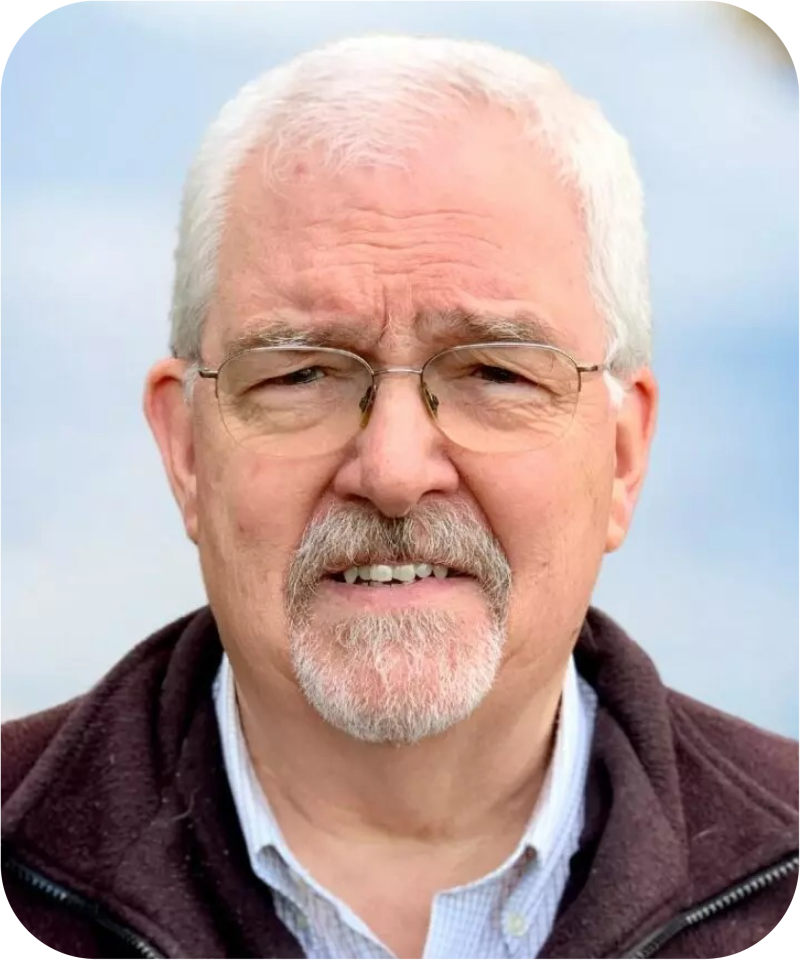
Pastor Bob Sanders

Audio Version of Sermon


Ecclesiastes 4:9-11

9Two are better than one, because they have a good reward for their toil. 10For if they fall, one will lift up the other; but woe to one who is alone and falls and does not have another to help. 11Again, if two lie together, they keep warm; but how can one keep warm alone? 12And though one might prevail against another, two will withstand one. A threefold cord is not quickly broken.

Risky Business

This is the final message in our series on Building Great Relationships and it’s all about marriage.  I don’t know whether you’ve noticed, but I don’t preach a lot on marriage.  It’s risky business and I’ll tell you three reasons why. 

One reason it’s risky is pastoral.  As your pastor, I know a number of you are struggling in this area and preaching on the subject can add to your pain.  Some here are single and fine with it, while others desperately wish they weren’t.   Some are widowed and still grieving.  Some are divorced or divorcing.  Some are in marriages where there’s great strain and long-standing conflict.  How do I preach about marriage when I know it’s a painful topic to some of us here? 

A second reason why it’s risky business is personal.  I’m not only a pastor, I’m also a husband.  My relationship with Debbie isn’t perfect so who am I to stand here and preach about marriage?  And the people who know me best – my wife and family – will be listening to every word I say.  Do you have any idea how risky this is for me?  I’ve told you before about the pastor who announced his goal for the coming year was to visit the home of every member.  He worked hard at it over the months, out visiting every night, and he almost made his goal.  But as the year came to a close he had to admit he hadn’t been able to get to everybody just yet.  And he said if anyone would like a visit before the end of the year, please raise their hand.  One person raised a hand – his wife.  I’m hoping my wife and family will refrain from raising their hands too many times this morning.

And a third reason this is risky is practical.  There’s so much that can be said and needs to be said about marriage.  How can you squeeze it all into one twenty-minute sermon?  Answer: you can’t (or at least, I can’t).  At some point I’d like to preach an entire series on marriage, but today I’m going to limit myself to just three very basic truths, three images of marriage I’ve been working on for the past 33 years.  That’s how long Debbie and I will have been married come this July 13.  Think with me about marriage as a garden, marriage as Gospel reenactment, and marriage as a threefold cord.   

A Cultivated Garden

The first and most important truth is this: marriage is a long-term investment requiring enormous amounts of skill and time and energy.  The image that comes to mind is a cultivated garden. 1  I’m not much of a gardener, but I admire those who are, and I love to see the beauty their work brings forth.  Now a garden of any kind takes a tremendous amount of work.  It takes planning and planting, cultivating and caring, watering and weeding, fertilizing and feeding.  And not only an enormous amount of work, but the work is continual.  A garden takes almost constant attention.  You have to get out into your garden pretty much every day or it gets away from you. 

And the very basic point I want to make here is that a healthy marriage does not come instantly and without major effort.  Your marriage is not like sod that you buy and roll out and you have an instant lawn to walk on.  Your marriage is not like flowers you buy at the store and bring home and put on your coffee table.  Your marriage is a garden.  It takes work and it takes time.  And the difference between the healthy marriage you can and should have, the fruitful marriage you can and should have, is as far removed from the marriage you start with as the apple tree is from the apple seed.  It’s a long way from the seed to the apple tree.  A long way.

But here’s what happens to a lot of people.  We get into marriage expecting that if we’ve found the right spouse, the right person, then Bingo! we’re going to have a happy and fulfilled life.  And then later on when you begin to see the problems you’re having, when you see how much worse your spouse is than when you got married, the conflicts you’re stuck in, how much criticism you’re getting from your spouse – the danger is you’ll think the problem is this particular person you got married to.  When, in fact, the problem isn’t the person.  The problem is your marriage is like a garden.  It takes a lot of work all the time.  You can’t get mad and give up on a garden if it doesn’t produce fruit right away, can you?  You can’t put in work at the start, at planting time, then do nothing and coast till harvest.  The same is true for marriages.

Men in particular have trouble with this.  I think I speak for most men when I say that we really don’t think our marriage should take so much work.  If it takes this much work, all this time and effort, all this talking and even counseling, then something must be wrong.  But that’s not the way it is with a garden, is it?  You can’t just plant and leave it alone and expect anything good to come of it.  Marriage, like that garden, takes work, lots of work, lots of help (most good marriages I know spend time with a counselor) – and all of this over lots of time.

And just one more note on this point.  A garden takes a lot of work all the time, no matter what the conditions.  If there’s a lot of rain, you’ve got to get out and weed or nothing good will come up.  And conversely if things are dry, you’ve got to do lots of watering.  And the same thing goes for our marriages.  If things are going well for you – personally, financially, professionally – you’ve still got to work on your marriage or it will get squeezed out by all that success.  And if there are lots of troubles in your life, if it’s pretty dry for you personally, financially, professionally, or with your kids, you still have to work on your marriage, you still have to feed and water and cultivate it or it will atrophy. 

Gospel Reenactment

That’s the first point, and I know it’s pretty basic but it needs to be said up front.  A marriage is like a garden – it’s a long term investment requiring enormous amounts of work in all kinds of conditions and over a great many years before it produces the results, the fruit we all long for.  And by the way, we’re going to be offering some help for married couples this coming Fall.  Samaritan Counseling Center is putting together a very practical course to strengthen marriages, so you might want to keep an eye out for that. 

The second point has to do with the purpose of marriage.  Why get married?  In ancient cultures, the purpose was to enhance the security and the status of your family.  It was largely economic: you marry this particular person because he or she can boost your family’s well being.  The idea of marrying for love didn’t get come along until sometime in the middle ages.  We moderns are different.  We don’t marry to enhance our family’s status.  We marry to enhance our happiness.  Modern culture says marriage is supposed to make me happy.

Christian faith says that both of those approaches are inadequate.  Christian faith says that for believers marriage has another purpose.  It’s what Pastor Tim Keller calls Gospel reenactment.  The purpose of marriage is to reenact the Gospel.  What does that mean?  Well, think about what the Gospel tells us.  According to the Gospel, Jesus sees us stuck in our sinful, fallen human condition.  But he comes into our messed up lives and lays down his life in sacrificial love.  And the result is we’re set free to become that new creation he’s made us to be.  The Gospel says Jesus saw us as not even close to being the men and women God designed us to be.  But he came to us and with sacrificial love met our deepest needs so we could become the redeemed and transformed people God intends. 

The purpose of marriage is to reenact the Gospel.  Put it this way: the purpose of marriage is to help your spouse become that new creation God intends through sacrificial service.  It means you have to develop a servant mindset or a ministry mindset where your spouse is concerned.  You lay down your life, you love sacrificially, so that the Lord can make your wife, your husband into a thing of eternal glory. 

This is so different from what modern culture is about.  Most people today have a consumer attitude toward marriage.  They think the purpose of marriage is to “make me happy.”  And so the message of the heart is “I’ll be the spouse I ought to be if and as long as you’re the spouse you ought to be.”  But if you understand Gospel reenactment, if you understand the purpose of marriage to help your spouse become that new creation through sacrificial service, then the message of the heart becomes “I will be the spouse I ought to be whether or not you’re the spouse you ought to be, because Jesus gave me love like that.  Jesus loved me not because I was lovely but in order to make me lovely.  And I am going to do that for you.”

That is fundamental, but it can be easily misunderstood.  So let me add a clarification.  This does not mean marriage should be only one-way.  This does not mean it’s OK for you do all the giving, all the serving, all the sacrificing while your spouse does nothing.  That is so NOT ministry mindset.  It’s actually kind of selfish of you to do so much and let your spouse get away with doing so little.  That’s the worst thing you can do – to make it easy for your spouse to sin against you that way.  A ministry mindset means “I want to help my spouse become that new creation God has planned.  I want to share in what God is doing in this person’s life.”  And so a ministry mindset means sometimes you have to confront, sometimes you have to speak the truth in love to you spouse and say “It’s not OK to be selfish or abusive or lazy or absent.”  Do you see this?

It’s why love is an action before it’s a feeling.  Love is something you do.  Most marriages start like this: we get married because we fall in love, because we love the greatness, the beauty in the other person.  But then disillusionment sets in.  We soon discover that the greatness, the beauty that initially attracted us is more embryonic, more undeveloped than we first realized.  It’s going to take a lot more work, a lot more weeding and watering, feeding and fertilizing than we ever thought. 

And at that point we can either go the consumer way and say, “You’re not the spouse you’re supposed to be, so I’m not going to be either.”  Or we can go the Gospel way and say, “I’m going to lay down my life for you and be the spouse I promised whether you are or not.”  The more we act loving even when we don’t feel loving, the more love can grow. 

Threefold Cord

Marriage as a cultivated garden.  Marriage as Gospel reenactment.  The third and final image comes from our Scripture reading: marriage as threefold cord.  In our reading from Ecclesiastes, the writer starts off with several reasons why “two are better than one.”  They have a good reward for their toil.  They help lift one another up after falling.  They stay warm at night.  They resist an enemy.  And then, after singing the praises of two over one, the final verse concludes, “A threefold cord is not quickly broken.” 

In other words, a husband and wife are not all that’s needed for an effective marriage.  It takes a threefold cord, and the third strand is the power of God binding the other two strands, the husband and wife, together.  The greatest resource for a long-term marriage is for Jesus Christ to be at the center of that marriage, for husband and wife to each have their own relationship with him, for his power to keep them together through good times and bad, as long as they both shall live. 

When Debbie and I were receiving premarital counseling all those years ago, our pastor had us read a wedding sermon written by Dietrich Bonhoeffer in 1943 from his prison cell in Nazi Germany. 2  I still think it’s one of the best things ever written on marriage.  I’ve taken a couple paragraphs and put them on the cover of your bulletin. 

Bonhoeffer says that when a Christian bride and groom stand before the congregation and bravely say “I will” to each other, something else happens – something only the eyes of faith can see.  God places his hand over their clasped hands, and God adds his promise to theirs.  “God has sealed your ‘I will’ with his own,” Bonhoeffer writes, “He [crowns] your assent with his.”  And he goes on to say God “creates out of your love something that did not exist before – the holy estate of matrimony.”

“Your love is your own private possession,” says Bonhoeffer, but “marriage is more . . . It is an estate, an office. . . Love comes from you, but marriage from above, from God.”

And I love this closing line: “It is not your love which sustains the marriage, but from now on, the marriage that sustains your love.” 

There’s a lot of wedding planning going on at my house these days.  It’s exciting and occasionally a bit stressful.  And it’s good to be reminded of what it’s all for.  The real centerpiece isn’t something Becca or Dave or any of us can do.  It’s what God is going to do.  It’s when God joins them together.  It’s when God crowns their promises with his own promise, when God seals their “I will” with his “I will.”  That’s what a Christian wedding ceremony celebrates.  And it’s why every Christian wedding ceremony includes these words of our Lord Jesus: “Whom therefore God has joined together, let no one put asunder.” 3

We cannot do it on our own and by ourselves.  It takes a threefold cord – a man and a woman and Jesus Christ.   It’s Jesus Christ at the center of our individual lives and at the center of our life together that keeps us working in the garden – feeding and watering and pulling weeds day by day, year after year – and then rejoicing when the fruit appears.  It’s Jesus Christ at the center of our individual lives and at the center of our life together that empowers Gospel reenactment, that lets us love not just with feelings but with actions, laying down our lives so that our spouse can become that glorious new creation our Lord intends.

It’s a threefold cord, and as Ecclesiastes assures us, it is “not quickly broken.”

* * * * *

I know we come from a lot of different places this morning.  And for those who are married, there are two things you must not say to your spouse as you leave.  You must not say, “I’ve been trying to tell you that for years!”  And you must not say, “It’s hopeless.  I can’t do it.” 

Husbands and wives, whatever your situation today, however long you’ve been at it, whatever the level of health or hurt in your marriage, Jesus Christ stands ready to make a difference.  Jesus Christ stands ready to forgive you for your failures, to break down the walls and heal the hurts, to give you the sacrificial love you need.  Ask him for patience and hope to keep cultivating the garden.  Ask him for power to live out the Gospel on behalf of your spouse – that ministry mindset.  Ask him to come and live at the center of your life together, to create that threefold cord that is not quickly broken.

  1. The images of a cultivated garden and of Gospel reenactment come from the teaching of Dr. Tim Keller of Redeemer Presbyterian Church, in a presentation entitled “Cultivating a Healthy Marriage.”
  2. Dietrich Bonhoeffer (Eberhard Bethge, ed.), “A Wedding Sermon from a Prison Cell,” in Letters and Papers from Prison (Touchstone, 1997), pp.41-47.
  3. See Matthew 19:6.