Lake Grove Presbyterian Church - All rights reserved

Lake Grove Presbyterian Church, Lake Oswego, Oregon
Background sky
SearchContact Us
Menu, Worship , Care, Connect, Equip, Witness, About LGPC
Background Cross


Sunday Sermon

Background Cross


To download the text and/or audio file for this week's sermon, please go to the "Sermon Archive" page and follow the instructions you'll find there.

For a study guide to prepare for next week's sermon, please click HERE


A WORD OF ANGuish

Echoes from Calvary, Part 4

March 18, 2007 – Fourth Sunday in Lent

Lake Grove Presbyterian Church

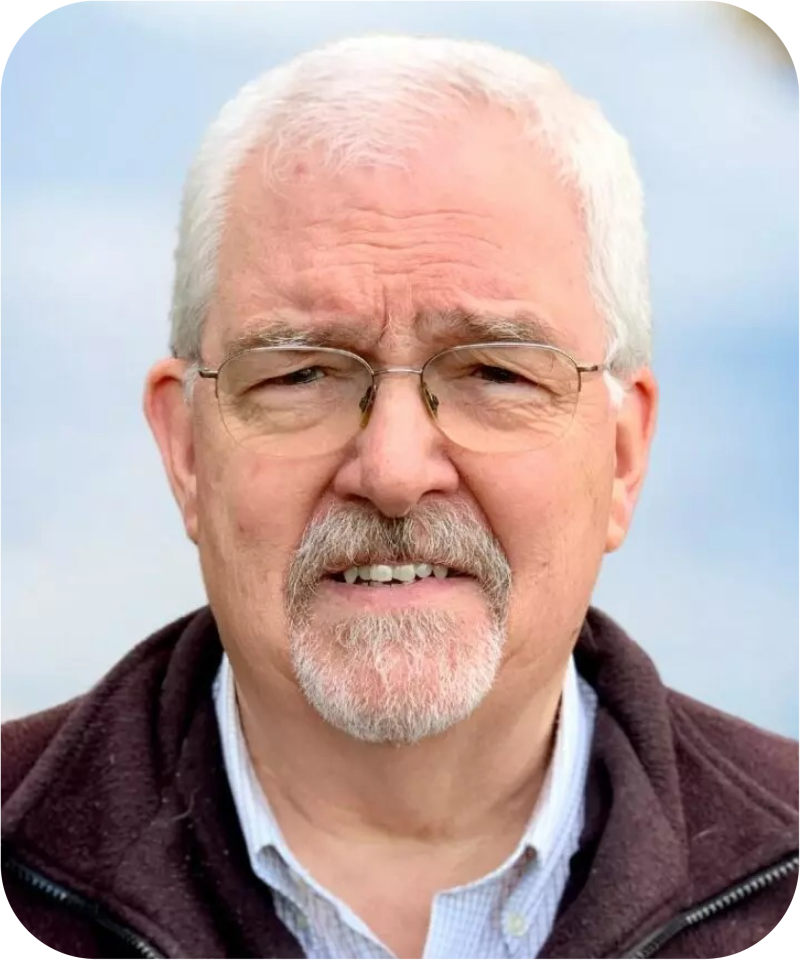
Pastor Bob Sanders

Audio Version of Sermon


During this Lenten season we gather each Sunday at the foot of the cross and linger long enough to hear the final words of the One who hangs there – our crucified Lord and Savior.  The Gospel writers record seven last “words” or sayings of Jesus, and so far we’ve considered three of them.  The first was a word of pardon: “Father, forgive them, for they don’t know what they’re doing.”  The second was a word of assurance to the thief beside him: “Today you will be with me in Paradise.”  Last week we heard a word of compassion as Jesus entrusted his mother to one of his disciples and said, “Woman, here is your son . . . Here is your mother.”  This morning we come to the fourth word – a word of anguish, yes, but also a word of hope. 

Our New Testament reading is Mark 15:33-36.

33When it was noon, darkness came over the whole land until three in the afternoon. 34At three o’clock Jesus cried out with a loud voice, “Eloi, Eloi, lema sabachthani?” which means, “My God, my God, why have you forsaken me?” 35When some of the bystanders heard it, they said, “Listen, he is calling for Elijah.” 36And someone ran, filled a sponge with sour wine, put it on a stick, and gave it to him to drink, saying, “Wait, let us see whether Elijah will come to take him down.”

The Cost of Calvary

This is as bad as it gets.  Mark says that darkness came over the whole land.  Evil – raw, cruel, bloody evil – seems to triumph.  An innocent man hangs dying on a cross. 

Every religion has its own visual symbol.  For Buddhists there is the wheel-shaped lotus flower.  For Muslims there is the crescent moon.  For Jews there is the Star of David.  We Christians have chosen for our symbol an instrument of torture and death.  In the ancient world, the cross was an obscenity.  Why do we display it so prominently in our sanctuaries, even wear it around our necks?  Why take something so gruesome and sing of it as something wondrous? 

The answer, of course, is because of the One who suffered and died there – the “Prince of Glory,” Jesus our Lord.  The cross is wondrous because there we see the love of God in the clearest, most compelling way.  In the words of Romans 5:8: “God shows his love for us in that while we were yet sinners, Christ died for us.”  Why lift up this instrument of death?  Because the One who died there was none other than the Son of God laying down his life for us in a love so costly it staggers human imagination.

A love so costly…  Have you ever considered the cost of Calvary?  Think with me for a moment about what this act of love cost the Son of God.

It cost him agony of body.  The physical suffering was brutal.  Remember, he had been arrested some eighteen hours earlier, and then hounded sleeplessly through the hours of the night.  He’s been savagely beaten, then flogged within an inch of his life.  After that he was made to carry the heavy crossbeam through the streets of Jerusalem toward Golgotha.  He collapsed in exhaustion and had to be dragged to the hilltop, where Roman soldiers drove spikes through his hands and feet, then left him hanging there, waiting for death to end the pain. 

Why is he suffering like that?  Why go through that kind of physical agony?  Love alone is the answer.  But it wasn’t just agony of body that Jesus endured.  He suffered agony of heart as well.  What happened on the cross meant intense emotional pain for Jesus.  Where are his friends, the ones who promised they’d never forsake him?  Well, one of them has betrayed him, another has denied ever knowing him, and the rest have pretty much fled for their lives.  The crowds he had blessed and fed and healed now curse him.  The people of Jerusalem for whom he wept – they now mock him.  Emotional suffering.  This Jesus who gave himself for others is now hated and rejected by those he came to save.  And that hate, that rejection, cost our Savior indescribable agony of heart.

But even that was not all Christ endured.  Besides the agony of body and heart, there was his agony of spirit.  The pain of the whip and the nails was excruciating.  The pain of being cursed by those he came to bless was heartbreaking.  But the pain of bearing the sin of the whole world was the worst.  How to describe it?  The apostle Paul says that God made Jesus, who knew no sin, to be sin for us (see 2 Cor. 5:21).  Understand that Jesus never committed sin, never disobeyed God, never needed to feel guilt or shame, never knew a single moment in his life when he was not in perfect, unbroken communion with his Father.  But now as he hangs on the cross he became sin.  He bears the burden of all the sin of all humankind.

Who can fathom what this agony of spirit cost him?  We know that in his moral perfection Jesus could see sin in all its hideousness in a way that we cannot possibly see it.  That was why he prayed in the garden, “Father, if it is possible, let this cup pass from me” (Mt.26:39) – the cup full of all the betrayals and broken promises, all the abuses and abandonments, all the selfishness and injustice and suffering of all humanity.  Yet on the cross Jesus lifted that cup and drank it to the dregs.  He became sin. 1

When that happened – and human words are inadequate to express this – Jesus became a spiritual derelict.  God, whose holiness cannot bear to look upon sin, had to turn away from his beloved Son.  At that moment, Jesus felt something horrible, something he’d never known before: he felt separated from God, forsaken by God.  And that’s when he cried out with a loud voice, “Eloi, Eloi, lema sabachthani?”  Which means, “My God, my God, why have you forsaken me?”  It’s the darkest moment in all history.  At that moment our Lord experienced what it is to be cut off from God, what it is to be abandoned by his heavenly Father, what it is to be lost for eternity. 

Why did he suffer so?  Why did he endure such agony of body and heart and spirit?  He did it not because he had to, not because he was a helpless victim or a pawn in some cosmic necessity.  No, he did it solely because he loved us – you and me and all of us.  Costly love. 

God With Us

And that costly love assures us of at least two things.  First, it assures us God is with us when we suffer.  And second, it assures us God is for us to save us. 

Listen again to this word of anguish.  Jesus is quoting words straight from Psalm 22 – words he must have memorized.  Words that come straight from his broken heart: “My God, my God, why…?  Why have you forsaken me?”  At that moment, Jesus felt as far away from God as anyone ever has.  And what that means, in the words of Corrie ten Boom, the Dutch woman who suffered her own hell in the depths of a Nazi death camp, is that “no matter how deep our darkness, the Lord is deeper still.” 2

No matter how deep our darkness…

It’s been pretty dark for some of us lately.  I look across this room and I can see glimpses of it.  The darkness of death that has taken a loved one.  The darkness of pain – physical pain, yes, and emotional pain.  The darkness of depression.  The darkness of anxiety over that friend, that relative who’s so hurting and so alone.  The darkness of four years of war in Iraq and the uncertainty of what tomorrow will bring.  The darkness of the HIV/AIDS pandemic sweeping away millions of adults and leaving behind multiple millions of orphaned and vulnerable children.    

And in the midst of that darkness we wonder, “Where is God?”

But in that wondering, in that darkness, we are not alone.  Jesus Christ gives voice to the fear that grips our hearts: “My God, my God, why have you forsaken me?”  On the cross, Jesus stands in solidarity with all who suffer.  He is, in the words of the prophet Isaiah, the man of sorrow, acquainted with grief.  No matter how deep our darkness, he is deeper still.

In his book entitled Night, author Elie Wiesel writes of his experiences in the death camps of Auschwitz and Buchenwald.  He tells of one especially horrible time when the guards tortured and hanged a young boy for some minor infraction of the camp rules.  As the boy’s body dangled from the rope, someone asked, “Where is God now?”  And Wiesel heard a voice inside say, “Where is God?  He is here – hanging on this gallows.” 3

We do not have a God who is removed from the pain of this world.  We do not have a God who dozes off in some celestial recliner.  We have a God who came down and hung on the gallows with us.  And so we can never say to God, “You don’t understand.  You don’t know what it’s like.”  The cross says God not only understands.  The cross says God has been there.  And God is still there.  The cross says to all who suffer, “You are not alone.” 

There is no darkness so deep that Jesus is not deeper still.  God is here – in Jesus – suffering with those who suffer.

God For Us

The cross proclaims God’s solidarity with those who suffer.  He is with us.  But that’s not all.  There on the cross Christ is not only with us, he is also for us – his arms stretched wide in a loving embrace, his death paying the price to gain our salvation. 

I shared this story at last year’s Good Friday service, but I think it’s worth sharing again.  After World War Two a few of the Manhattan Project scientists remained working on nuclear technology at Los Alamos.  One of these was Louis Slotin.  In 1946 he performed a risky experiment called “tickling the dragon’s tail.”  Two globes of plutonium were brought close enough together to start a nuclear reaction.  Then just as the reaction began, Slotin would use a screwdriver to push them apart and stop it.  But on this day, just as the reaction began, Slotin’s screwdriver slipped.  The chain reaction continued, filling the room with a dazzling bluish glow.  Instead of running away and possibly saving himself, Slotin reached down and tore the two globes of plutonium apart with his bare hands, thus stopping the reaction.  His selfless act saved the lives of seven others in the room.  But nine days later he died in agony. 4

That’s a small scale picture of what happened on a cosmic scale some 2,000 years ago.  There on the cross, Jesus took on sin’s most concentrated radiation.  There on the cross he allowed himself to be touched by its curse, to let it take his life.  And in that selfless act of costly love, Jesus broke the chain reaction of sin.  He broke its power – on the cross.  He died so that others might live. 

Take it a step further.  This suffering and death, this costly love, was for you, for me.  Do you understand that?  Do you understand that you and I are sinners?  You and I deserve condemnation, not grace.  Yet because of what happened on Calvary, you and I receive what we could never earn or deserve – forgiveness of our sins, peace with God, eternal life.  In the words of one of our songs, “For me he was forsaken.  For me he died alone.  My sins forever taken, that I might be His own.”

Do you believe that?  Many of us do.  But there are many others today who say something like, “Well, I believe in a generic kind of God.  I don’t believe in Jesus, and I don’t believe in the cross.  I believe in a God who loves everyone.”

These are people who have some vague idea of the love of God, but there’s nothing wondrous about it, nothing about that love that makes them marvel.  They believe in it, but because there’s no cross and therefore no real cost to this kind of love, it doesn’t get to them.  They don’t wonder at it, or weep over it, or fall on their knees in worship because of it.  They have no idea what Isaac Watts is talking about when he says,

Were the whole realm of nature mine,

That were a tribute far too small;

Love so amazing, so divine,

Demands my soul, my life, my all.

They aren’t stunned by that kind of love, and as a result they aren’t transformed by it.  But when you see this cross for what it is, when you see that you’re a sinner deserving death and how Christ took that death for you, became sin for you, you marvel.  You’re filled with gratitude and love.  You want to give him your soul, your life, your all.  And that’s when you’re transformed.  See, if you don’t understand the cross, if you don’t believe in what happened there, you’ve no idea what it cost God to save you.  You’ve no idea what our Lord did to love you.  And your understanding of the God’s love will be just an abstract, impersonal thing – not a wondrous, life-changing thing.  And therefore it will not transform you.

Come to the cross.  Come close enough to hear these words: “My God, my God, why have you forsaken me?”  Do you know what that means?  It means the sinless Son of God became sin for you, that you might be forgiven.  It means Jesus Christ laid down his life so that you might not perish but have eternal life.  Survey this wondrous cross until you see it – this costly love.  Let it embrace you.  Let it penetrate your mind and break your heart. 

Come.  Marvel.  Wonder.  Worship.  And you will be changed.

  1. From a sermon by Dr. Vernon C. Grounds, “The Price Love Paid.”
  2. From a sermon by the Reverend Heidi Husted Armstrong, “Nobody Knows the Trouble We’ve Seen…Nobody Knows But Jesus,” preached to Columbia Presbyterian Church on September 16, 2001.
  3. Elie Wiesel, Night, quoted by Daniel Migliore in Faith Seeking Understanding, p.103.
  4. See www.nuclearfiles.org.