
Lake Grove Presbyterian Church - All rights reserved

Lake Grove Presbyterian Church, Lake Oswego, Oregon
Background sky
SearchContact Us
Menu, Worship , Care, Connect, Equip, Witness, About LGPC
Background Cross


Sunday Sermon

Background Cross


To download the text and/or audio file for this week's sermon, please go to the "Sermon Archive" page and follow the instructions you'll find there.

For a study guide to prepare for next week's sermon, please click HERE

ENCOURAGE ONE ANOTHER

Paul’s First Letter, Part 5

1 Thessalonians 4:13-18

February 4, 2007

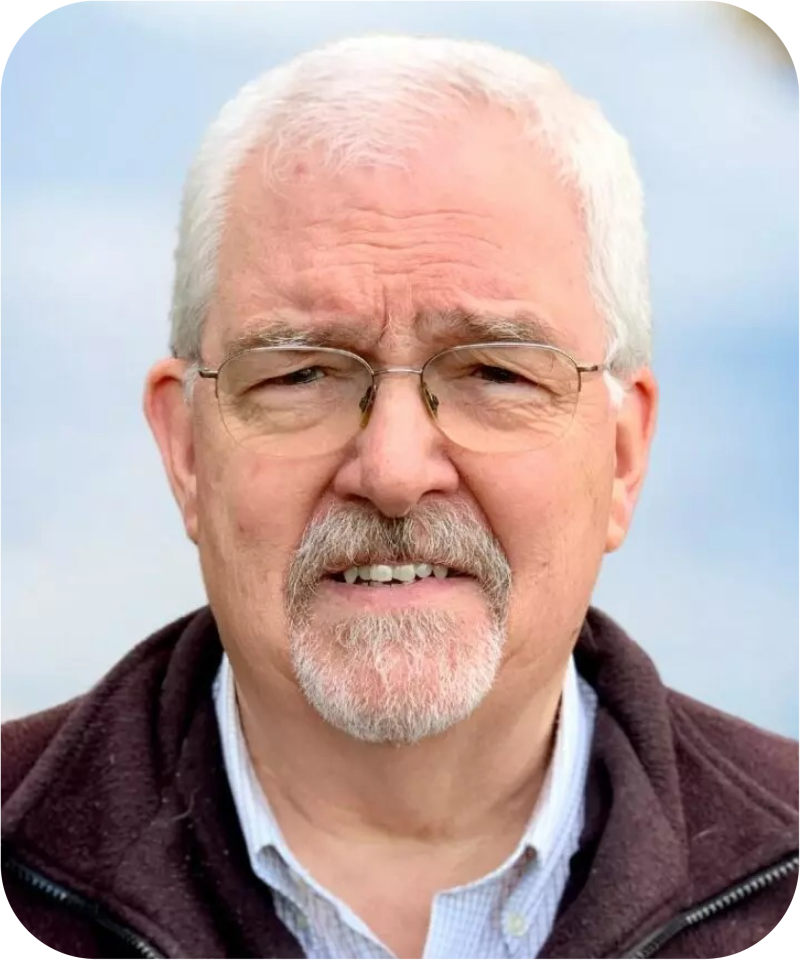
Pastor Bob Sanders


Audio Version of Sermon 


1 Thessalonians 4:13-18

13 Brothers and sisters, we do not want you to be uninformed about those who sleep in death, so that you do not grieve like the rest, who have no hope. 14 We believe that Jesus died and rose again, and so we believe that God will bring with Jesus those who have fallen asleep in him. 15 According to the Lord's word, we tell you that we who are still alive, who are left till the coming of the Lord, will certainly not precede those who have fallen asleep. 16 For the Lord himself will come down from heaven, with a loud command, with the voice of the archangel and with the trumpet call of God, and the dead in Christ will rise first. 17 After that, we who are still alive and are left will be caught up together with them in the clouds to meet the Lord in the air. And so we will be with the Lord forever. 18 Therefore encourage one another with these words.

A couple years ago my family gave me the extended DVD version of Peter Jackson’s Lord of the Ring movies (which I love), and I started watching the whole wonderful saga once again over the Christmas holidays.  It takes quite a while, so it was just a couple weeks ago when I finished watching the third and final film, The Return of the King.  I was deeply moved by one scene, which you may recall if you’ve seen it.  The white city of Minas Tirith is being attacked by the legions of the dark lord, Sauron.  The forces defending the city are hopelessly outnumbered, and it looks like all will be killed.  One of them, a hobbit named Pippin, is very afraid, and he turns to Gandalf the wizard and says, “I didn’t think it would end this way.” 

To which Gandalf replies, “End?  No, the journey doesn’t end here.  Death is just another path . . . one that we all must take.  The grey rain-curtain of this world rolls back, and all turns to silver glass . . . and then you see it.”

Gandalf seems to gaze at something off in the distance, so Pippin asks, “What?  Gandalf?  See what?”

Gandalf says, “White shores . . . and beyond.  The far green country under a swift sunrise.”

The hint of a smile appears on Pippin’s face and he says, “Well, that isn’t so bad.”

Gandalf returns the smile and says, “No . . . no, it isn’t.”

And together they turn to face the final battle against the forces of darkness.  It’s a perfect illustration of what the apostle Paul is trying to do for the young Christians at Thessalonica.  He wants to put courage into them.  And to do so, he considers it vital for them to know what happens when we die.  Verse 13 again: “Brothers and sisters, we do not want you to be uninformed about those who sleep in death, so that you do not grieve like the rest, who have no hope.”

Kathie’s Gift

What’s going on here?  While Paul was with them, he taught these Thessalonian believers about the return of the real King, Jesus Christ, and how the Lord Jesus when he comes again will take his people home to himself.  Evidently he told them it could come at any time, and they should always be ready. 

But then Paul had to leave the city, and in the months that followed some of the members of the church died, and their loved ones were deeply upset.  Not only were they dealing with the painful emotions of grief, they were uncertain about the eternal destiny of their relatives and friends.  What happens to Christians who die before the Lord returns?  Are they in danger of missing out?  Could they be somehow lost forever?  These are some of the questions Paul addresses in our passage this morning.

Paul begins by saying, “We don’t want you to uninformed” – that is, we don’t want you to be ignorant, to be unaware, to be agnostic about the eternal destiny of those who die in the Lord.  This is a little embarrassing, but I have to tell you what comes to my mind when I read these words.  Kathie Williams was a dear friend to many of us.  She died just over two years ago, on January 17, 2005.  One day, a few weeks before her death, she said to me, “Bob, I’m ready for you as my pastor to talk to me about heaven.”  See, we’d agreed some months earlier that I’d be there to do that, to talk with her about heaven – but only when she was ready, not before. 

Well, now she was ready, and all of a sudden I was in crisis.  I realized that I had never put together in my own mind a clear description of what the Bible says about heaven, and I’d never heard anyone else do that either.  Imagine, three years at Princeton Seminary, two years of doctoral work at San Francisco Seminary, more books read and lectures listened to than I care to count, to say nothing of more than 25 years of continuous preaching – and I wasn’t sure what to say to a member of my own flock, about heaven!

 Kathie gave many gifts to those who knew her, but one special gift she gave me was this chance to study, pray, and think about what the Bible says about heaven.  I don’t know if what I said helped her or not, but I can tell you it helped me. 1  (If you want to hear the full version of what I learned, join us at our seminar called “The Last Thing We Talk About” – the next one is coming up in the fall). 

Grief and Hope

“We don’t want you to be uninformed about those who sleep in death,” Paul says.  But before he gives us any new information, he says something that is both profound and comforting.  He says, “We don’t want you to grieve like the rest, [those] who have no hope.”  When someone we love dies, we grieve.  Christians grieve.  But not like non-believers who have no hope, who don’t know Jesus Christ.

Sometimes when I’m helping a family plan a memorial service for a loved one who’s died, they’ll say something like, “We don’t want the service to be sad.  We want it to be happy.  We want it to be a time of joy, not a time of grief.”  And I understand what they mean, and I too want the service to be a celebration of Christ’s victory over death.  But the fact is, we celebrate through tears of sorrow.  Grief is not only natural and necessary for healing.  Grief is Christian.  Jesus wept at the graveside of his dear friend, Lazarus 2 and we need to give ourselves permission to do the same. When someone you love dies, your heart breaks.  And just because we believe in the risen Christ doesn’t mean we have to deny that pain or put a happy face on it.  No, if we really loved that person, we grieve.  For however long and however loudly we need, we grieve.  But not as those who have no hope.

Grief and hope are not opposites.  They belong together.  As Christians we look back on the person we loved with gratitude and sorrow, deep love and desperate loneliness.  We grieve.  And we hope.  We look forward with expectation, with impatient longing, with this intense anticipation of reunion.  Because, as Paul tells us in verse 14, “We believe that Jesus died and rose again, and so we believe that God will bring with Jesus those who have fallen asleep in him.”

For me, that’s the key verse in this passage.  It’s almost like a little creed.  Two times in that verse Paul says “we believe.”  First, we believe Jesus died for us, broke death’s back, and rose again.  And second, we believe God is taking care of those who have died, that they’ll never be lost, that when Jesus returns he will bring them with him, and that we will be reunited with him and with them.  That’s our hope.  That’s what we cling to in our grieving.  That death cannot have the final word.  That one day we’ll see our risen Jesus, and we’ll get to be with him.  That one day we’ll get our loved ones back, those who have died in Christ.  That one day, as we read in Revelation, “He will wipe every tear from [our] eyes, and there will be no more death, no more mourning, no more crying, no more pain.” 3 

The Last Enemy

Mourning, crying, pain – death brings all of these.  It’s why the Bible never speaks of death as a kindly friend.  According to the Bible, death is an intruder, an enemy (“the last enemy” is how Paul describes it in 1 Corinthians 15:26).  As Christians we don’t deny death or sentimentalize it.  We know that we are all terminal cases, and unless Jesus comes first, death will come for each of us. 

And death, the last enemy, has the power to do certain things to us.  Death has the power to bring fear into our lives.  Who among us has not felt it?  The fear of pain, the fear of separation, the fear of the unknown.  Death can do this, can make us afraid.

And death has the power to create this sense of loss.  Death rips this hole in fabric of our lives.  Even if the one who dies is a believer, that particular person – that friend or family member, that spouse or child – is suddenly gone and cannot be replaced.  Death disrupts, bringing grief and sorrow. 

Death also has the power to cut us off with unfinished business.  There’s often one thing more we wish we could have said, could have done.  An apology extended.  A forgiveness granted.  A word of gratitude.  A final, “I love you.”  Death takes the person away, and can leave us with unfinished business.

And death has the power to inflict a poisonous sting.  Again, in 1 Corinthians 15, Paul says, “The sting of death is sin.” 4  Sin is our rebellion against grace, our defiant determination to play God, our willful worship of self.  And sin is deadly.  If I stubbornly refuse God’s offer of salvation and keep Jesus at arm’s length, then when death comes – guess what?  I get what I wanted.  I get to be apart from God in the life to come.  Death seals the choices I make today.  And that’s why it is a terrible thing to die unreconciled to God.  Death has the power to inflict this sting, the sting of sin.  The last enemy can do these things – for now.

But Paul is telling us that there is a power greater than death.  Because of Jesus Christ, the One who died and rose again, the final word is life forevermore.  Yes, our enemy death has certain powers.  But Jesus has defeated death.  And for those who trust in him there are certain things death can never do.

Because of Jesus, death can never destroy us.  Our earthly bodies will die, yes, but that’s not the end of the story.  When we die, we go to be with the Lord, and he will keep us safe.  Just as Jesus rose again, so shall we.  To newness of life.  To receive a resurrection body like his.  Death can never destroy the believer.

And death cannot separate us from our Lord.  That’s crucial to what Paul is saying here.  Those who’ve died in the Lord before he comes will be kept and will return with him at the end.  At the end of Romans 8 Paul asks, “Who can separate us from the love of Christ?”  And immediately he answers, “Death can’t.  In fact, neither life nor death, nor anything else in all creation can separate us from God’s love in Jesus Christ our Lord.” 4  Jesus himself says the same thing in John 14 (a passage we read at the memorial service of those who’ve died in the Lord):

In my Father’s house there are many dwelling places.  If it were not so, would I have told you that I go to prepare a place for you?  And if I go and prepare a place for you, I will come again and take you to myself, so that where I am you may be also. 5

Death cannot separate us from him, from our risen Lord, Jesus Christ. 

Also, death cannot sting the Christian.  Death may be painful, but there is no poisonous sting of sin.  Jesus Christ took the sting for us on the cross.  We will die one day, but because of what Jesus did, it will be a “stingless” death.  Because of what Jesus did we are reconciled to God, and death cannot sting us anymore.

And finally death cannot separate us from our loved ones, from those who have died in Christ.  This passage promises we will be reunited with them.  We will see them and we will know them.  We will recognize them, reminisce with them, rejoice with them – Kathie and Carl and all the rest.  And death will never spoil the party.  There are some aspects of our Lord’s return I don’t fully understand – the rapture, for example, and the timing and so forth.  But I am sure of this.  Jesus will bring our loved ones with him when he comes.  Or, if we die first, we will go to be with him and them.  And in either case, what a glad reunion that will be! 

The best picture I know of what it will be like is at the airport.  It’s what happens there just outside the security gate when a loved one comes in after a long journey – the cries of joy, the warm tears, the hugs and kisses, the celebrations.  That’s what it will be like!  That’s what it will be like on that glad day, the day we get our friends and loved ones back, those who died in Christ.  On that day, as a friend of mine puts it in a song he wrote, there will be

No more goodbyes

No more departures with tears in our eyes

Just hellos, how-are-you’s,

And welcome-back sighs

And forever no more goodbyes. 6

The Best Is Still to Come

I began with a quote from The Lord of the Rings.  I’ll close with a quote from another of my favorite stories.  In the final chapter of the final book of the Narnia series, The Last Battle, C. S. Lewis paints a beautiful picture of what heaven is all about.  The chapter is called “Farewell to Shadow-Lands,” and in it some English school children are in a train wreck, and the next thing they know they are in the presence of their friend Aslan, the great lion (and Lewis’ Christ-figure in the books).  Aslan tells them, “You are – as you used to call it in the Shadow-Lands – dead.  The term is over: the holidays have begun.  The dream is ended: this is the morning.”

And then Lewis concludes the Chronicles of Narnia with this, one of my favorite paragraphs in all of literature:

And as He spoke [Aslan] no longer looked to them like a lion; but the things that began to happen after that were so great and beautiful that I cannot write them.  And for us this is the end of all the stories, and we can say that they lived happily ever after.  But for them it was only the beginning of the real story.  All their life in this world and all their adventures in Narnia had only been the cover and the title page: now at last they were beginning Chapter One of the Great Story, which no one on earth has read: which goes on for ever: in which every chapter is better than the one before. 7

The last time I checked, the death rate was still one hundred percent.  And for some it may come quite soon.  Are you prepared for that?  If you are troubled by your own mortality, if you feel uncertain or unready, I beg you: make sure of your relationship with Jesus Christ.  Make certain you are trusting him alone to save you – not anyone or anything else.

These images we’ve been describing from Scripture, from film, and from literature – let them sink in.  Don’t flee from them.  Embrace them.  Allow yourself to get excited about what’s on the other side.  Death isn’t an end, you know, not if you belong to Christ.  It’s just the beginning of Chapter One of the Great Story.  And the best is still to come.

Pippin was right: It really isn’t all that bad.  So “encourage one another with these words.”  In the name of the Father, and of the Son, and of the Holy Spirit.  Amen. 

  1. One way it helped me was to lead me to read (and reread) a very helpful book, which I highly recommend to all who are searching for a deeper understanding of what lies ahead: Heaven by Randy Alcorn (Tyndale, 2004).  Some of the material in this sermon is taken from this immensely helpful book.
  2. See John 11:17-37ff.
  3. Revelation 21:4.
  4. 1 Corinthians 15:56.
  5. Romans 8:35-39.
  6. John 14:2-3.
  7. Michael Kelly Blanchard, “No More Goodbyes,” Quail Ministries.
  8. C. S. Lewis, The Last Battle (Macmillan, 1956) pp.183-184.