Lake Grove Presbyterian Church - All rights reserved

Lake Grove Presbyterian Church, Lake Oswego, Oregon
Background sky
SearchContact Us
Menu, Worship , Care, Connect, Equip, Witness, About LGPC
Background Cross


Sunday Sermon

Background Cross


To download the text and/or audio file for this week's sermon, please go to the "Sermon Archive" page and follow the instructions you'll find there.

For a study guide to prepare for next week's sermon, please click HERE

SILENT NIGHT

Songs of the Season, Part 5

December 24, 2006

Meditation for Christmas Eve (7:00, 9:00, 11:00 p.m.)

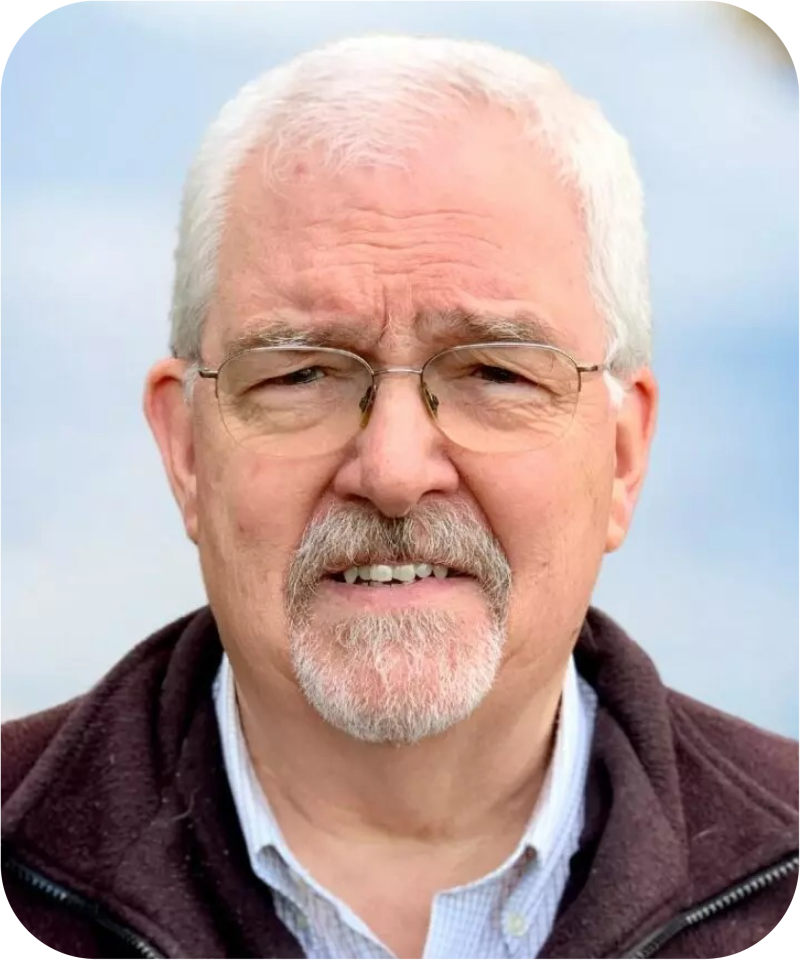
Pastor Bob Sanders


Audio Version of Sermon 


Over the past four Sunday mornings we’ve been looking at some of the great Christmas carols we love to sing – the songs of the season.  We started with “O Come, O Come, Emmanuel,” then we looked at “Joy to the World,” then came “Hark! The Herald Angels Sing,” and earlier today it was “O Little Town of Bethlehem.” 

Tonight we have the privilege of considering the greatest and most beloved of the songs of the season: “Silent Night.”  Many of you know something of its story. 1  It was written in 1818 for the midnight Christmas Eve service at St. Nicholas Church in Oberndorf, Austria, a tiny village high in the Tyrolean Alps.  The village priest was Father Joseph Mohr, and he had been planning the service for months, but that very morning he discovered the church organ wouldn’t play.  He tried to fix it, but nothing seemed to work, and it looked like there would be no music on Christmas Eve at St. Nicholas.

It was then that Father Mohr remembered a Christmas poem he had written two years before.  It was right after he’d been called to bless a newborn baby in the home of one of his poorest parishioners.  Something about the simple beauty of that mother and child touched him, and as he walked home through the winter night he began composing some verses which later he wrote down.  He’d never done anything with it, but now he got it out, shoved it into his pocket, and hurried through the village streets to the home of Franz Gruber.

Gruber was the village schoolteacher and part-time organist at St. Nicholas.  Father Mohr showed him his poem and asked if he could come up with some music.  It had to be a simple melody, something that could be played on guitar (the only instrument available), and it had to done quickly – there were just a few hours left before the midnight service.  And Franz Gruber did it – set the poem to music, and they sang it for the first time that night accompanied by Gruber’s guitar: “Silent Night, Holy Night.” 

A few days later the organ repairman came to the little church, heard the story, and began promoting the song around the area.  It spread throughout all of Europe, and came to this country in 1839.  Soon afterward it was translated into English, as well as most of the major languages of the world.  And by 1960 “Silent Night” was recognized as the most recorded song in music history.

Redeeming Grace

What is it about this carol that makes it the greatest and most beloved of all our Christmas carols?  I can think of two reasons. 2  The first is the beautiful way it portrays the good news of Christmas – the wondrous birth of our Savior.  We all know the words to the first stanza:

Silent night, holy night!

All is calm, all is bright,

Round yon virgin mother and child!

Holy Infant, so tender and mild

Sleep in heavenly peace,

Sleep in heavenly peace.

Then the second stanza expands the focus to include the shepherds and the angels who bring the good news of great joy:

Shepherds quake at the sight,

Glories stream from heaven afar,

Heavenly hosts sing “Alleluia’

Christ the Savior is born.”

And then the third stanza, which is my favorite, begins to consider the meaning of all this:

Silent night, holy night!

Son of God, love’s pure light . . .

Light is such an important part of the Christmas story.  The prophet Isaiah says, “The people who walked in darkness have seen a great light; those who lived in a land of deep darkness – on them light has shined.” 3  Matthew told of a star whose light guided the Magi to the newborn King.  And in our reading from John a moment ago we heard these words: “The light shines in the darkness and the darkness has not overcome it.” 4  And here in “Silent Night” we sing, “Son of God, love’s pure light.”   And then this great line:

Radiant beams from Thy holy face,

With the dawn of redeeming grace.

The dawn.  Notice the carol has been telling about night and now it talks about dawn, and the coming of a brand new day as a result of this nighttime event.  “With the dawn…” not of the sun coming up, but the “dawn of redeeming grace.” 

What a magnificent way to describe the good news of Jesus’ birth.  It’s the dawn of a new day, a new beginning, a new possibility.  It happens in the middle of the night.  And we’re often frightened by the night, aren’t we?  The darkness can be terrifying.  But in the middle of this night, this silent and holy night, an amazing event occurs.  Christ the Savior is born – and it’s the “dawn of redeeming grace.” 

In the New Testament the word redeem means to set free, to liberate.  And that’s what happens at Christmas.  Jesus’ birth means liberating grace, love that sets us free – free from our fears, free from our sin, free from death itself.  And that’s what some of you need most of all tonight: a new beginning.  Forgiveness.  Freedom.  That’s what this carol speaks of.  Jesus is born, and it’s a brand new day for each and every one of us:

With the dawn of redeeming grace,

Jesus, Lord at Thy birth,

Jesus, Lord at Thy birth.

A Lullaby

That’s the first reason this carol is so great – the beautiful way it portrays Jesus Christ our Savior and Redeemer.  And the second reason for its greatness is that this carol is a lullaby.  More than any other carol, “Silent Night” comes to us with the simplicity and gentleness of a lullaby, and there’s something about a lullaby that touches every one of us. 

Can you remember singing to your children when they were tiny?  Singing or humming softly, praying they’ll finally go to sleep?  Every parent knows what that’s like.  “Silent Night” does this amazing thing.  Here we are at the greatest moment in history, this awesome moment when God comes down and is born in Bethlehem, and what are we singing?  Not the mighty “Hallelujah” Chorus, but a song so gentle it can put a child to sleep.  A lullaby.  And that’s why we love it.

You hear it in opening stanza:

Silent night, holy night!

All is calm . . .

The Roman world wasn’t calm.  The New Testament knows that, and so did Joseph Mohr.  It was a turbulent time, full of injustice and the oppression of Roman rule.  Herod the King was a murderous despot, and it was a terrifying time to be alive.  Just as it is tonight in too many places in our world (which is why we need you to give generously to that special offering as you’re leaving). 

Yet “all is calm…” 

And that’s what you say when you sing a child to sleep: 

All is calm, all is bright

How can it be bright?  It’s the middle of the night.  But there’s this brightness “round yon virgin mother and child” – this mystery and glory.  And then these words of lullaby, sung to the Holy Infant:

Sleep in heavenly peace,

Sleep in heavenly peace.

There’s a profound quietness to this carol, a counterpoint to the other carols of joy and praise.  We need both kinds of carols at Christmas.  We need the energy and the exuberance of “O Come, All Ye Faithful” and “Joy to the World!” and the “Sussex Carol” (as sung by our choir).  We need to sing these with trumpets and strings and tympani and especially with the pipe organ – this greatest of all instruments, invented by the Christian church – as played by someone like Mitch Groh, with skill and power.  We need energy and exuberance at Christmas.

Remember, birth itself is not quiet.  It’s a loud, noisy event.  First there are the cries of the mother, the birth pangs.  And then that sharp and piercing wail when the newborn baby first cries out as if to say, “I’m here!  I’m alive!”  A wonderful sound, loud but welcome.

But then after the cries there comes a pause.  There comes this deep sigh when the child, exhausted after the struggle of birth, settles down at its mother’s breast.  And everything is all right.  Everything is at peace.  That’s when you sing a lullaby, like this: 

Silent night, holy night!

Sleep in heavenly peace,

Sleep in heavenly peace.

So there are these two equally important moments in our celebration of Christmas: on the one hand, the loud and joyful exuberance, and on the other the pause of quietness and calm.  There’s a time for the carol of praise, and a time for the lullaby of peace.  

My hunch is that some of you are here tonight because you need to hear that song of peace, that lullaby.  I know that some of you face an uncertain future: a job change, a relocation, a health crisis, a family breakdown.  Some of you have children in the hospital tonight, and you’re not sure how things are going to turn out.  Some of you have lost a child.  Some of you have children serving in the armed forces (and some of them, praise God, are here with you tonight, at least for a short while).  Some of you are alone tonight and wish you weren’t.  Some of you are afraid.  Some of you have a loved one in trouble tonight, or you yourself are in trouble.

Tonight, for just a moment, can you let this song be for you?  Can you hear these words of Joseph Mohr, and imagine the Father singing them softly to you, God’s own lullaby for you: 

Silent night, holy night! 

No matter how turbulent your world, no matter how troubled your life – “all is calm, all is bright.”  Yes, the night can be dark and frightening.  Yes, there are real dangers.  But look at those “radiant beams” of holy love, and know that this night brings “the dawn of redeeming grace.”  A new day.  You can begin again, fresh and new, forgiven and set free. 

Silent night, holy night!

Wondrous star, lend thy light;

With the angels let us sing,

Alleluia to our King;

Christ the Savior is born,

Christ the Savior is born.

            Amen.  And now, let’s sing it together.

  1. For the history of this carol, I’m indebted to Ace Collins, Stories Behind the Best-Loved Songs of Christmas (Zondervan, 2001).  I also used information from Kenneth W. Osbeck, Joy to the World: The Stories Behind Your Favorite Christmas Carols (Kregel, 1999), and from Dale V. Nobbman, Christmas Music Companion Fact Book (Centerstream, 2000), as well as The Presbyterian Hymnal (software edition).
  2. For these insights, I’m indebted to the Rev. Earl Palmer in his sermon “Silent Night,” preached on Dec.24, 2002 at University Presbyterian Church, Seattle, WA.
  3. Isaiah 9:2.
  4. John 1:5.