Lake Grove Presbyterian Church - All rights reserved

Lake Grove Presbyterian Church, Lake Oswego, Oregon
Background sky
SearchContact Us
Menu, Worship , Care, Connect, Equip, Witness, About LGPC
Background Cross


Sunday Sermon

Background Cross


The Blessed Defeat

The Gospel According to Jacob, Part 7

Genesis 32:22-32

November 12, 2006

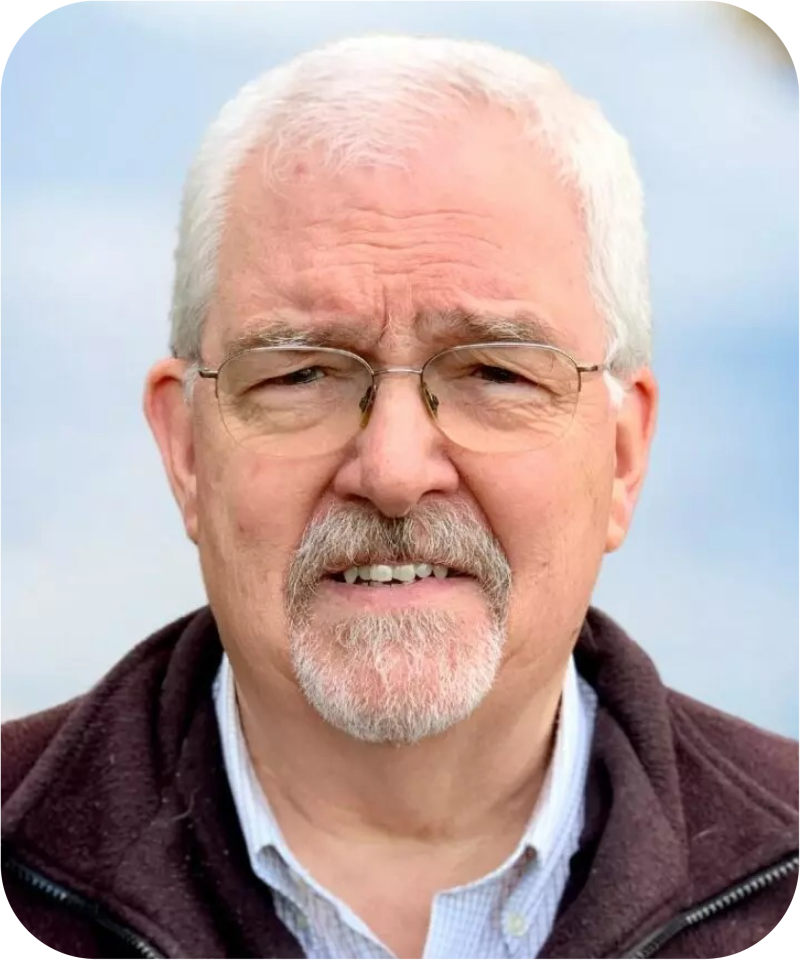
Pastor Bob Sanders

Audio Version of Sermon  


Genesis 32:22-32 (The Message)

 22-23 But during the night he got up and took his two wives, his two maidservants, and his eleven children and crossed the ford of the Jabbok. He got them safely across the brook along with all his possessions.

 24-25 But Jacob stayed behind by himself, and a man wrestled with him until daybreak. When the man saw that he couldn't get the best of Jacob as they wrestled, he deliberately threw Jacob's hip out of joint.

 26 The man said, "Let me go; it's daybreak."

   Jacob said, "I'm not letting you go 'til you bless me."

 27 The man said, "What's your name?"

   He answered, "Jacob."

 28 The man said, "But no longer. Your name is no longer Jacob. From now on it's Israel (God-Wrestler); you've wrestled with God and you've come through."

29 Jacob asked, "And what's your name?"

   The man said, "Why do you want to know my name?" And then, right then and there, he blessed him.

 30 Jacob named the place Peniel (God's Face) because, he said, "I saw God face-to-face and lived to tell the story!"

 31-32 The sun came up as he left Peniel, limping because of his hip. (This is why Israelites to this day don't eat the hip muscle; because Jacob's hip was thrown out of joint.)

The title of this message comes from the quote by C. S. Lewis on your bulletin cover: “The story of every conversion is the story of a blessed defeat.”  He was describing what happened to Joy Davidman, the woman who would later become his wife. 1  She came from a Jewish family but was brought up without any particular religious beliefs.  As an adult, she became gifted poet, a dedicated Marxist, and a thoroughgoing atheist.  But to her absolute surprise, God came after her.  God broke through her defenses, and one night she surrendered herself and became a committed Christian.  It was, as her husband would later say, a most blessed defeat.

In our story God breaks through Jacob’s defenses and turns him every way but loose.  Jacob winds up blessed, all right, but also broken.  Is that what it means to encounter the living God?  In our church mission statement we talk about the importance of getting changed through a transformational encounter with God.  What does that encounter look like, and given what happened to Jacob, is that something we really want? 

In this story we find three principles for a real encounter with God.  Three reasons, if you will, why Jacob was able to meet God in this transforming way, and why any of us can meet God.  

First, you have to meet God by yourself.

Second, you have to meet God in your weakness.

Third, you have to meet God at the center of your life. 2

By Yourself

Let’s look at the first one: you have to meet God by yourself.  According to verse 24, Jacob is all by himself.  If you were here last week, you know why.  Twenty years earlier he’d left home to get away from his brother Esau.  He’d cheated Esau out of his birthright, and Esau had sworn to kill him.  He’d spent the past two decades working for his uncle Laban.  But the Lord told Jacob it’s time to go home, so he gathers up his family and all his possessions and heads back.  But he hears that Esau and four hundred men are thundering out to meet him, and he figures they’re going to kill him.  So on the night before the crisis he sends everybody off, including his family.  Jacob wants to be alone.  On what might be his last night, he wants to think, to reflect, to pray.  And it’s when he gets alone that he encounters the living God. 

To have an encounter with God you have to meet him personally, for yourself, and usually by yourself.  I’m not denying the value of Christian friends, a small group, a community of faith.  These are very important, and we stress that at Lake Grove Pres.  But, important as friends and family members are, they can’t do your believing for you or your praying for you.  Your Christian spouse and your Christian friends can’t meet God on your behalf. 

Community is important, but there are some things you have to face by yourself.  Imagine you’re in the hospital and facing surgery.  No one knows how it will turn out.  Everybody surrounds you – your friends, your family, your pastor.  And we all tell you, “You won’t face this alone.”  And you’re encouraged by all the cards and flowers, all the prayers and words of support.  But when they wheel you into the operating room, they won’t wheel in your friends and your pastor.  And unless you have the Lord in your heart and in your head, you’re going to be alone, utterly alone.

Some of you come to church week after week.  You hear stories of how God is changing the lives of others, and you find that encouraging.  You see God moving through this congregation here and around the world, and that gives you hope.  But you haven’t had your own encounter with God.  But you can’t borrow other people’s faith.  It’s easy to come to a church like this and think you’re experiencing God when what you’re doing is living off the experience of others.  You see God changing other people, and that’s great.  But is he changing you?   

Jacob’s story tells us you have to meet God by yourself.

In Your Weakness

That’s the first principle, and it brings us to the second: you have to meet God in your weakness.  Now this gets pretty scary.  Because what this story tells us is that the God we’re talking about, the God we seek to encounter, is no tame God.

I want you to see that Jacob is finally getting it together.  For the very first time, he’s doing things right.  Why is he there in the first place?  When he hears Esau is coming to kill him, why doesn’t he turn around and run?  Because God told him to be there.  Back in chapter 31:2 God appeared to him and said, “Go back home to the land of your birth, and I will be with you.” 

So Jacob is obeying God, even at the risk of his own life.  And he’s frightened.  So he is seeking God, he’s praying to God.  Now, how would you expect God to treat someone like that?  Based on what you know of God, how would you expect him to respond to someone like Jacob – someone who obeys him at the risk of his own life, someone who’s seeking him in prayer, someone who’s scared and all alone?  What will God do to a man like that?

Well, in this case he clobbers him.  Jumps him in the dark and knocks him down.  Assaults him.  Puts a hammerlock on him. And then maims him for the rest of his life.

What kind of God is this?  Most of us were taught that if you do what God asks, if you pray and read the Bible and go to church and do all the right things, then God will – what?  Knock you down and cripple you? 

This is not what most of us imagine God to be.  This is no tame God.  This is the God C. S. Lewis had in mind in The Chronicles of Narnia.  Some of you remember that scene where one of the characters is talking about Aslan, the Christ-figure, and he says, “Safe?  Who said anything about safe?  ‘Course he isn’t safe.  But he’s good.  He’s the King, I tell you.” 3

I want to be very careful here.  Yes, God comforts us in our suffering.  God is never remote or clinical in the face of our pain.  God weeps with those who weep, and, as we said last week, God stands beside us in our fears.  All that is true.  But in this story we see something else.  We see this hard truth: namely, that God has to wrestle us into a transformed life, rather than comfort us into a transformed life.  God has to wrestle most of us in. 

Notice something else.  When does Jacob figure out it’s God who jumped him?  By verse 28 the answer is clear, because he says, “You have wrestled with God and you’ve come through.”  But before that, where did Jacob catch on?  When did he realize this is God he’s grappling with?  

It happens at verse 25.  In our translation it says that as they wrestled, the man “deliberately threw Jacob’s hip out of joint.”  In Hebrew it says he touched him – barely touched him.  Just a tap, the merest contact.  Jacob wrestles this guy all night to what he thought was a draw.  And then all he does is touch his hip.  And that brings incredible pain.  His leg is now utterly useless.  And Jacob realizes that the person in his arms could have obliterated him any time he wanted. 

And that’s the turning point.  That’s when Jacob began to hang on and not let him go.  See, when somebody attacks you, you wrestle to get them away.  But in verse 26, Jacob changes his tactic.  He says, “I’m not going to let you go.  I want you in my life.”  When did that change happen?  At the moment of pain.  At the moment of weakness.  At the moment he realized he was utterly vulnerable and defenseless.

Friends, this is not a tame God.  This is not a safe God.  This is a God who says, “I want to bless you.  I want to wake you up to who you are and who I am.  I want to help you turn away from the stupid and self-destructive things you’ve been doing and give you a new life.  And the only way I can do that is to wrestle you in.  I can’t comfort you in, because that’s just not how it works for most people.” 

I know that’s true in my life.  Most of you know that’s true in your life.  One more quote by C. S. Lewis – his great line about how God whispers to us in prosperity, but he shouts to us in adversity. That’s when God finds us.  That’s when we realize it was God who jumped us.  In our pain, in our weakness, in our own blessed defeat.

At the Center

You have to meet God yourself.  And you have to meet him in your weakness.  And the third principle is this: you have to meet him at the center.  God will meet you only at the real center of your life.

There are two themes throughout the story of Jacob that lead us to the center of his life.  The first has to do with wrestling.  All his life, Jacob was wrestling, grappling, trying to get the upper hand.  If you were to ask Jacob, “Who have you been wrestling with all your life?” he’d say, “It’s Esau.  The problem of my life has been Esau.  I wrestled with him in my mother’s womb.  I wrestled him for the birthright.  I wrestled him for my father’s favor and leadership of the family.  And now he’s about to kill me.  So, the problem of my life has been Esau.  Esau is the one who has stood between me and what I wanted – my life, my joy, my honor.”

But in the middle of the night God jumps him and says, “Wrong.  I’m the One you’ve been wrestling with all your life.  Not Esau.  Me.  You thought the main event was tomorrow morning.  No, it’s tonight.  It’s right now.”

God is saying, “Jacob, underneath all your wrestlings you’ve been wrestling Me.  You’ve been resisting Me.  You’ve been trying to fight Me out of your life.  You’ve wanted to be your own Savior and your own Lord.  I’m at the center of what’s wrong with your life.  I’m the one you’ve been wrestling with.  Not Esau, not Isaac, not Laban.  Me.”

So the one theme of Jacob’s life is wrestling.  The other is blessing.  And if you’ve been with us for this series, you know how important the blessing has been to Jacob.  He grew up devoid of inner blessing.  There was this gaping hole inside him, this inner vacuum.  He was not convinced of his own worth, his own value.  Why was he wrestling with everybody?  To get the blessing.  Why did he try to fool Isaac?  To get the approval of his father and fill that empty place with blessing.  Why did he have to get the beautiful Rachel for his trophy wife?  To get the blessing. 

All his life, Jacob has been using God as a means to an end.  Every time he talks to God, he’s trying to get God to help him get what he thinks is the blessing.  Look at his prayers.  “OK, God, if you’ll help me get the leadership of the tribe, if you’ll help me get my inheritance, if you’ll help me get a family, then I’ll serve you.  That’s the blessing I need God.  And if You’ll help me get it, I’ll work with You.” 

But now something changes.  At the end he’s holding on to God and saying, “I will not let you go until YOU bless me.”

Jacob finally sees it.  And he says, “I’ve been an idiot.  Here’s the approval I wanted in the approval from my father.  Here’s the beauty I wanted in my wife, Rachel.  Here’s the success I was chasing after when I was working for Laban.  God, I’ve been using You all my life.  I’ve been saying, ‘Help me get the blessing there … and there … and there.’  But the blessing is here.  YOU have the blessing I’ve needed all along.  Not Esau.  Not Rachel.  Not my father.  YOU are the only one that can fill the emptiness inside.  I will not let You go until YOU bless me.”

Do you see what this means?  We have this tendency to go to God because we think we know what the center of life is, and that’s where we want God to help us.  Our marriage is falling apart so we turn to God to get it fixed.  Our job is on the line and we go to God so we can hold on to it.  Our health is failing so we cry to God for help.  And these are important, and God does care.  But the problem is we’re going to God on the periphery of our lives, not at the center.  We’re saying, “I know where the center of my life is.  I know where to get the blessing – in this person or this achievement or this accomplishment.  God, help me get it.” 

But God says, “I don’t meet you in the suburbs of your life.  I only meet you downtown.  At the center.  I will not be an additive.  I will only come into your life when you realize that your lack of relationship with Me is the problem beneath all your problems, and that a vital relationship with Me is the blessing beyond all the blessings you’ve dreamed of.  Until you meet Me at the center of your life, until you put Me at that center, we cannot have an encounter.”

The Fight of Your Life

You have to meet God by yourself.  You have to meet him in your weakness.  You have to meet him at the center.

As the story ends and sun comes up over the Jabbok, we see Jacob limp away – broken, blessed, and with a new name.  No longer just Jacob – the one who’s always striving, always grappling, always struggling but never winning.  From now on he is Israel – the one who wrestled with God and won. 

Anybody here feeling jumped by God?  Know this: God only jumps you to bless you.  Anybody here feeling pain and weakness?  Remember, he’s no tame God.  He’ll turn you every way but loose.  He’s not safe.  But he’s good, I tell you.  And he’ll wrestle you as long as it takes to get you in.

What can you do?  Do what Jacob did.  Hold on.  Jacob was broken and in pain.  He didn’t understand what was happening to him.  All he knew was, “I’m going to cling to You, God, and not let go.  I’m not going to stop loving You, stop serving You, stop seeking You.  I’m going to hold on and not let You go until You bless me.”

The story of every conversion – Jacob’s, Joy Davidman’s, yours and mine – is the story of a blessed defeat.  Hold on till you see the One who’s wrestling with you wants to bless you.  Hold on, and that pain, that weakness, will be turned into strength.  It’s the fight of your life.  And in this fight, to surrender is victory.

  1. In his foreword to her book, Smoke on the Mountain (Westminster, 1953), p.7.
  2. I’m indebted to the Rev. Dr. Timothy J. Keller in his sermon “The Fight of Your Life” (Nov. 18, 2001 to Redeemer Presbyterian Church, New York, New York) for many of the insights that follow.
  3. C. S. Lewis, The Lion, the Witch, and the Wardrobe (Collier, 1950). pp.75f.
  4. C. S. Lewis, The Problem of Pain.