Lake Grove Presbyterian Church - All rights reserved

Lake Grove Presbyterian Church, Lake Oswego, Oregon
Background sky
SearchContact Us
Menu, Worship , Care, Connect, Equip, Witness, About LGPC
Background Cross


Sunday Sermon

Background Cross


THE LOVER

The Gospel According to Jacob, Part 5

Genesis 29:14-30

October 8, 2006

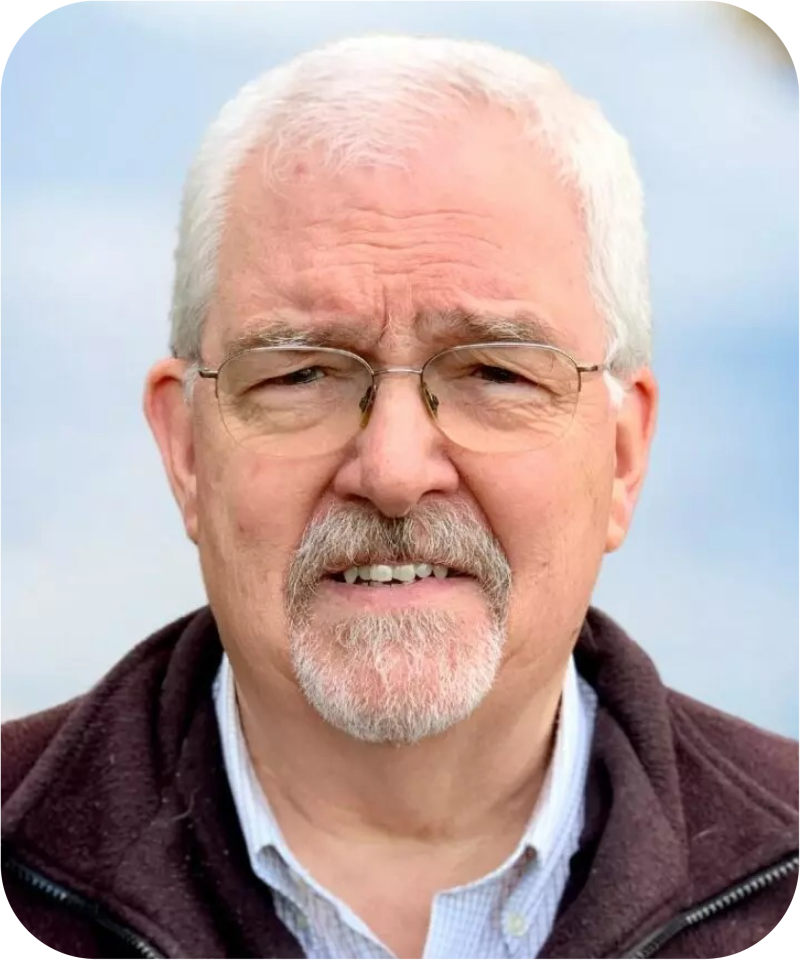
Pastor Bob Sanders

Audio Version of Sermon


Genesis 29:14-30 (The Message)

 14-15 Laban said, "You're family! My flesh and blood!"

   When Jacob had been with him for a month, Laban said, "Just because you're my nephew, you shouldn't work for me for nothing. Tell me what you want to be paid. What's a fair wage?"


16-18 Now Laban had two daughters; Leah was the older and Rachel the younger. Leah had nice eyes, but Rachel was stunningly beautiful. And it was Rachel that Jacob loved.

   So Jacob answered, "I will work for you seven years for your younger daughter Rachel."

 19 "It is far better," said Laban, "that I give her to you than marry her to some outsider. Yes. Stay here with me."


20 So Jacob worked seven years for Rachel. But it only seemed like a few days, he loved her so much.


21-24 Then Jacob said to Laban, "Give me my wife; I've completed what we agreed I'd do. I'm ready to consummate my marriage." Laban invited everyone around and threw a big feast. At evening, though, he got his daughter Leah and brought her to the marriage bed, and Jacob slept with her. (Laban gave his maid Zilpah to his daughter Leah as her maid.)

 25 Morning came: There was Leah in the marriage bed!

   Jacob confronted Laban, "What have you done to me? Didn't I work all this time for the hand of Rachel? Why did you cheat me?"


26-27 "We don't do it that way in our country," said Laban. "We don't marry off the younger daughter before the older. Enjoy your week of honeymoon, and then we'll give you the other one also. But it will cost you another seven years of work."  

28-30 Jacob agreed. When he'd completed the honeymoon week, Laban gave him his daughter Rachel to be his wife. (Laban gave his maid Bilhah to his daughter Rachel as her maid.) Jacob then slept with her. And he loved Rachel more than Leah. He worked for Laban another seven years.


Seeing What You’ve Got

In his book on Jacob, Presbyterian pastor Craig Barnes tells about Karl and Jan, a couple who’d been members of his congregation for about a year.  They threw themselves into the life of the church and started serving on several committees and ministries.  But then one night, during a mission committee meeting, Karl had a massive heart attack and died.  In a moment, Jan’s life was completely changed.

The first few months she was numb with shock.  As she worked her way through those early stages of grief she wondered if she’d ever feel anything but agony.  After a long time, she began to speak more about the wonderful blessing Karl had been to her.  She missed him terribly.

Then one Sunday morning Jan saw a young couple having a small argument in the church parking lot.  She couldn’t tell exactly what they were fighting about, but she knew it wasn’t all that important.  Like every couple, she and Karl had had plenty of these little spats.  But they all seemed so ridiculous now.  And she had this strong urge to run up to them and say, “Cut it out!  Don’t waste time on this.  Do you realize what you’ve got?  It could all be gone tomorrow.” 1

I think that question pretty well summarizes what I want to say this morning: “Do you realize what you’ve got?”  When I think about the many nights I’ve spent at committee meetings instead of with my family, I guess the only honest answer is no.  I don’t realize what I’ve got.  I sure don’t think very much about the fact that someday, maybe tomorrow, I’ll have to give it back.

You and I have received some truly wonderful blessings in the people God has given us.  The question is, can we see them?  Can we recognize them in the flawed, very human people next to us?  It’s not hard to see how precious they were after they’re gone.  But to really enjoy our relationships now, we have to look beyond the flaws and find the blessings.

The Trophy Wife

When we last saw Jacob, he was running for his life.  Throughout this series, we’ve seen how Jacob is this striver always trying to get ahead, this pretender who tricks his aged father, Isaac, into giving him the blessing that belonged to his older brother, Esau.  When Esau finds out, he’s furious and threatens to kill Jacob, so he has to flee for his life.  He heads out for Haran, hundreds of miles away, to live with his mother’s relatives.  On the way, as we saw a couple weeks ago, God appears to him in a dream and in sheer, undeserved grace promises to be with him, promises to protect him, promises to bring him home and to bless him with a family that one day will produce the Messiah, the One who will bless all the families of the earth.

Jacob arrives in Haran, where his uncle Laban lives, and he sees Rachel, Laban’s daughter, who we’re told was “stunningly beautiful.”  And Jacob falls head over heels in love with her.  In the verses just before our reading we learn that the moment he saw her, “Jacob kissed Rachel, and wept aloud.” 2  But I think it’s fair to say that it’s not Rachel Jacob loves so much as it’s the hope she represents: the fantasy, if you will. 

Remember, Jacob at this point is homeless, penniless, worthless by just about any standard.  People like Jacob, people who have this inner emptiness, this desperate loneliness inside, tell themselves that if they can just find that person who’s made for them, that one true love, then everything will be OK.  Everything else in life may have fallen apart, but if I can only have Rachel – beautiful, young, oh-so-desirable Rachel – then all will be well.  Rachel is the one who can fill the emptiness inside.  Rachel is the one who will make my life worthwhile.

Jacob has been working at Laban’s sheep farm for about a month when Laban comes to him to negotiate what his wages should be.  And Jacob says, “I will work for you seven years for your younger daughter Rachel.”  By the way, commentators point out that this is way more than anything Laban would have expected.  Seven years’ labor is an exorbitant sum for a bride price.  Clearly this young man is out of his head with love.  He’s besotted, overwhelmed with longing.  He’ll do anything, anything, as long as he can have his fantasy, his Rachel.

Now we’ve seen that Jacob is a con artist, a deceiver.  But he’s met his match in Uncle Laban.  Jacob works the seven long years, but the text says “it only seemed like a few days, he loved her so much.”  Every glimpse of her drove him crazy.  Think of all the nights he spent dreaming about her, imagining what it would be like to have her, to hold her.  Rachel the beautiful.  Rachel the trophy wife who would complete him and make his life worth living. 

Finally the wedding day came.  Laban throws a big feast, lots of eating and drinking.  The bride is kept under heavy veils all day so nobody can really see her.  That night Jacob gets to be alone with her in the marriage bed.  Bear in mind there are no electric lights and probably not many candles either.  And don’t forget, Jacob has been hitting the wine pretty hard all day.  He takes his bride into his arms and says, “Ah, Rachel, at last.”

But in the morning, it was Leah.

It’s the original bait-and-switch, and Jacob is furious.  He runs to Laban and says, “What have you done to me?  Didn’t I work all this time for the hand of Rachel?  Why did you cheat me?”

It takes one to know one, I guess.  Cheating seems to run in Jacob’s family. 

Laban explains that in these parts you never marry off the second daughter until the first one has a husband.  And then Laban makes him an offer he can’t refuse.  He tells Jacob to take a week of honeymoon with Leah, and at the end of that time he’ll let him marry Rachel.  All it will cost him is another seven years of his life, another seven years working on the farm. 

So Jacob marries Rachel also, because, as we read, “he loved Rachel more than Leah.”

In the thirty-two years I’ve been a pastor, I’ve conducted hundreds of weddings.  And I’ve noticed that after the bride walks down the aisle and stands next to the groom they almost always do the same thing.  It’s so subtle that most of the congregation misses it.  But just about every couple does it.  They sneak a quick look into each other’s eyes.  Maybe they’ve read this story.  And when they do that, I find myself wondering about the moment not long after the wedding when they will take a much harder look at each other and wake up to the realization that this is not exactly the person they thought they were marrying.

Whether you’re married or not, this is a story about finding love.  Real love.  It’s about recognizing the real person God has given you to love.  It’s about the struggle to let go of the fantasy person who always looks a little different, a little better than the real person.

The Love You Want and the Love You Have

Jacob thought he was getting Rachel.  In the morning he discovered it was Leah.  Sooner or later, every married person makes a similar discovery.  Listen to what Craig Barnes says in the quote on your bulletin cover:

Whoever it is that you love, that person is both Leah and Rachel.  You may love one more than the other, but they are wrapped into the same person.  Rachel is the one you love, and you’re sure that she will be the blessing to your life.  But you can’t have Rachel without taking Leah, whom you don’t love, and frankly, didn’t think you were getting.  However, not long after you are together you discover you didn’t get just Rachel.  You’re also very involved with Leah, and you can work for years trying to turn her into Rachel.

And he goes on to say,

Of course, this tension between the love you want and the love you have, is as hard for women as it is for men.  For all we know, Leah could have preferred Esau, like most everyone else, but her father stuck her with Jacob. 3

When we fall in love, we’re certain we’ve found the person of our dreams.  Oh sure, we notice the flaws in the other person, but we don’t think of them as flaws.  We think of them as cute little quirks that make the person more interesting.  Or minor blemishes we expect to change in the other person over time.  “Well, he’s not very expressive, but I’m sure I can get him to open up more.”  Or, “Well, she’s got a temper, but I’m pretty laid back so it won’t be a problem in our relationship.”  Or, “Well, he’s pretty sloppy, but over time I’ll get him to be more organized, more like me.” 

Yeah, right.

You fall in love with someone, and you think there’s only five percent in that person that bothers you.  But a day comes when you discover that five percent is taking up most of your time and energy.  If Rachel is the fantasy you were after, then guess what?  Most of your time is spent trying to improve Leah.  And this sets up tremendous conflict because Leah knows she’s not Rachel and never will be Rachel.  But this is what happens in our marriages, isn’t it?  We try to improve our partner.  But it doesn’t work.  In fact, it does more to destroy relationships than just about anything I can think of.  No one wants to be their spouse’s improvement project.  When someone we love tries to improve us, it only makes us more insecure and defensive, more distant and as a result more difficult to love.

We’re trying to get this person to be our Rachel, to be that fantasy who meets all our needs, who fulfills all our dreams, who finally gives us a reason for living.  But the fact is, no human being can ever do all that – meet all your needs, fulfill all your dreams, give you that reason for being.  Please hear that: no human being can ever fill that empty place inside.  Some people don’t understand that.  Some people keep chasing Rachel until she turns into Leah, then find another Rachel to go after, and another and another.  Some people become relationship consumers, constantly burning out one relationship after another, never able to settle into the love they have. 

Falling in love doesn’t take much effort.  It just happens to you, like tripping over something.  That’s we call it falling.  You don’t choose to fall in love.  But you certainly have to make choices if you’re going to stay in love.  Especially when you realize you’re not in bed with your fantasy.  You’re with Leah. 

In one of his books John Ortberg writes,

When life does not turn out the way you had planned, the option of quitting will always begin to look like sweet relief. . . Someone once asked a desert father named Abba Anthony, “What must one do to please God?”  The first two pieces of advice were expected: Always be aware of God’s presence, and always obey God’s Word.  But the third was surprising: “Wherever you find yourself, do not easily leave.”  The idea was that community is always hard, authentic friendship is hard, patience in work is hard – so leaving will always look more attractive in the short run.  But over the long haul, leaving easily has a tendency to produce people who live in a pattern of giving up.  Do not easily leave. 4

Leah the Blessing

“Love bears all things,” Paul wrote, “believes all things, hopes all things, endures all things.  Love never ends.” 5  If you want that kind of love, you’re going to have to look to something beyond that other person.  You’re going to have to turn to the God who is love, the God who is your only Savior.  No one else, no matter how made-to-fantasy he or she may first appear, can meet all your needs.  God alone can save you from loneliness, repair your broken self-esteem, and cause you to stand in the world as one who is good enough.

Until you rest in God’s love, you will never be free to love others for the flawed individuals they are.  You will constantly be trying to turn them into your savior, and they will never measure up.  Eventually your needs will become so overwhelming that the people around you will run away for their own protection because you exhaust them so much.  The only place to get those needs met is in a relationship with the God who loves you unconditionally.  The way to learn how to love is by letting God love you.  Letting God forgive you.  Letting God heal you.

Once you let God love you with all your flaws, then you have a better chance of loving the flawed people in your life.  You begin to see them for the blessing they really are.  You discover that the one who really needs changing isn’t your spouse.  It’s you.  And if you can hang in there long enough to see that, then something wonderful and lasting can begin to develop.

There’s an interesting epilogue to the story of Jacob’s relationship with Rachel and Leah.  After Jacob had been married to both women for many years, and after his great struggle to receive God’s blessing had come to a climax (we’ll hear about that in a few weeks), he finally got it.  He finally saw the blessing in being married to Leah.

If Jacob had a soul-mate, it was Leah, not Rachel.  Jacob grew up the second-best child, the unloved, the unblessed.  It was brother Esau everybody wanted to be around – powerful, charismatic, manly Esau – not mama’s boy Jacob.  And what about Leah?  The text does say she had “nice eyes,” but the Hebrew word can also mean “weak eyes” – as in crossed eyes or protruding eyes.  Truth is, Leah was homely, unattractive.  Her father had to trick someone into marrying her.  And poor Leah had to grow up in the shadow of Rachel – stunningly beautiful, drop-dead gorgeous Rachel.  If ever there was someone who could understand Jacob’s loneliness, who could empathize with him at the deepest level, it had to be Leah.  Rachel would never have a clue. 

I think Jacob must have figured that out, because in Genesis 35 we’re told that while he was traveling from Bethel to Bethlehem, Rachel died giving birth to Benjamin.  Jacob simply buried her in a grave along the way then continued his journey.  It was as if he was finally able to leave the trophy wife behind.  But when Leah died, Jacob had her buried in the family plot along with Abraham and Sarah, Isaac and Rebekah, and right next to the place where his own body would finally rest. 

In the end, Jacob could see Leah for the blessing she always was.

Dear ones, ask God to help you see that.  To see afresh the blessing he’s given you in that spouse, if you’re married.  If not, in that dear friend, that faithful small group, that family circle.  Are they perfect people from some fantasy island?  Hardly.  Do they have their flaws and failings?  Absolutely.  But, without a doubt, they are God’s great gift to you. 

How do I know that?  Because whoever they are, they loved you in spite of your flaws.  They hung in there with you, even when they discovered you were more Leah than Rachel (or, more Jacob than Esau).

Back to the question Jan wanted to ask that squabbling couple in the parking lot: “Do you realize what you’ve got?”

Do you?

If so, it might be good to do two things.  First, thank God for the gift of this person.  And second, be sure to let that person know.  Thank him, thank her for loving you, for hanging in there with you.  Don’t be like Jacob.  Don’t wait till the end.  Do it today.

In the name of the Father, and of the Son, and of the Holy Spirit.  Amen.

Prayer of God’s People and the Lord’s Prayer 6

         Father, we come to You, humbly, recognizing that we all come as Leahs before Your throne. There is nothing attractive about us, nothing within us in and of ourselves that you should desire us, and yet You have loved us with a love that can only be described as crazy and wild.  Willing that none should perish, You bore our cross and took the death which was our own, so that we might live with You in communion with You.  Help us Lord, as we encounter those whom You have given us as spouses, as companions, and as friends, to see the beauty of Your creation, the unique work of Your hands. 

         Lord, we pray specifically for the marriages of our church, that You would strengthen, support and renew those whose marriages, which have lost the shimmer of their first love.  Help us, O God, to keep the vows that we have made before your throne.  Give passion where there is no passion; give endurance where weakness is present, and breath life into that which seems lifeless. 

         Lord, as You act so graciously to us again and again, make us graceful people to those You have given us as sojourners in this life; our spouses, our parents, our children.  Remind us to speak words of honey to each other, rather than words of bitterness, help us to love one another as You have loved us. 

         And finally Lord, help us, the people of Lake Grove Presbyterian to be a people full of love which is patient, which bears all things, believes all things, and endures all things.  Remind us, that our ability to live in perfect love, comes only from our ability to remain in You, and live as You taught us to live, and to pray as You taught us saying,

         Our Father, who art in heaven, hallowed be Thy name, Thy kingdom come, Thy will be done, on earth as it is in heaven, give us this day our daily bread and forgive us our debts as we forgive our debtors, and lead us not into temptation but deliver us from evil, for Thine is the kingdom and the power, and the glory forever, Amen.

  1. M. Craig Barnes, Hustling God (Zondervan, 1999), pp.73-74.  I’m indebted to Dr. Barnes for many of the insights in this sermon.
  2. Genesis 29:11.
  3. Barnes, op.cit., p.76.
  4. John Ortberg, If You Want to Walk on Water, You’ve Got to Get Out of the Boat (Zondervan, 2001), p.103.
  5. 1 Corinthians 13:7-8.
  6. Prepared and offered by Pastoral Intern Brent James at the 9:30 service, and printed here with his kind permission.