
 |
HOLY WATER
The Gospel According to Jacob’s Father, Isaac
October 1, 2006, “Water Day”
World Communion Sunday
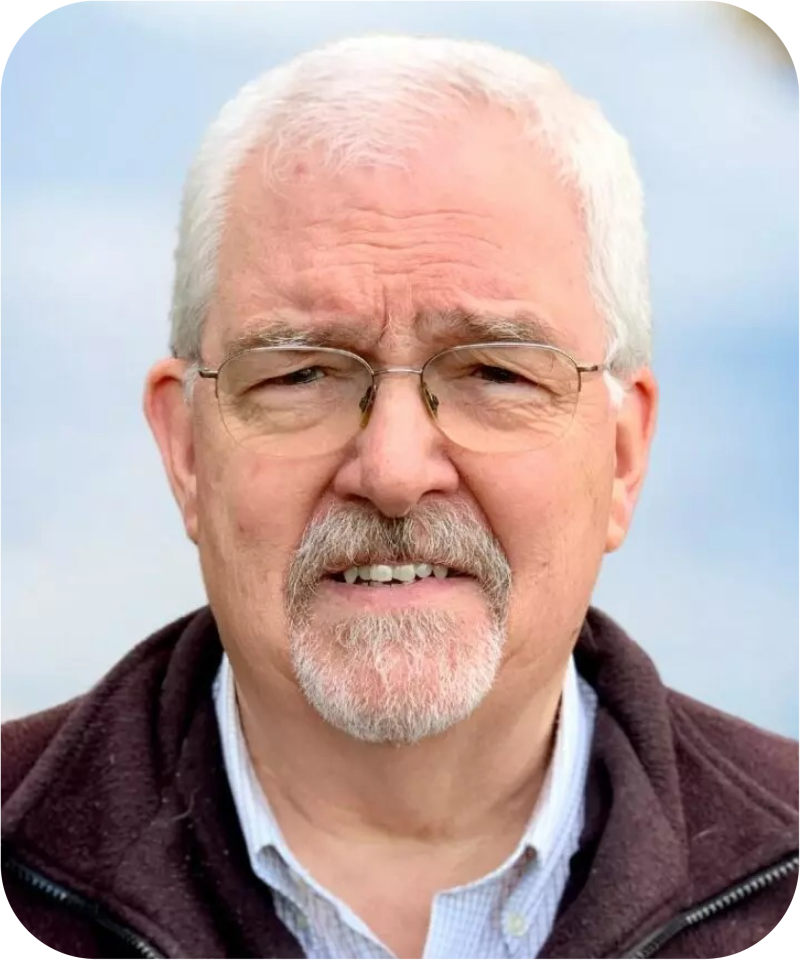
Pastor Graig Flach
I received the assignment to preach on World Communion Sunday about a month ago. We had also decided to focus on water today, since the special offering had been designated for “Water for Africa.” I opened the preaching schedule to see what the text for today was, and… and it was blank! - “to be announced.” So I surveyed the Scriptures for texts that have to do with water. And what do you know? Embedded right there in Jacob’s story is a chapter about Jacob’s father, Isaac, with a focus on water wells. I think God provided this passage within our current sermon series just as surely as He provides the water we need for living that flows from our taps or from the spigots of borehole wells, and just as surely as He provides the Living Water that nourishes our souls.
So this week we rewind the Genesis scroll a little, back before Jacob’s dream and before he swindles Esau’s blessing from Isaac, but after the birth of these twins and Jacob’s manipulation of Esau for his birthright. We are in Genesis 26, starting at verse 12; let’s see what the Lord has for us there:
Genesis 26:12-33
12 Isaac sowed seed in that land, and in the same year reaped a hundredfold. The LORD blessed him, 13 and the man became rich; he prospered more and more until he became very wealthy. 14 He had possessions of flocks and herds, and a great household, so that the Philistines envied him. 15 (Now the Philistines had stopped up and filled with earth all the wells that his father's servants had dug in the days of his father Abraham.) 16 And Abimelech said to Isaac, "Go away from us; you have become too powerful for us."
17 So Isaac departed from there and camped in the valley of Gerar and settled there. 18 Isaac dug again the wells of water that had been dug in the days of his father Abraham; for the Philistines had stopped them up after the death of Abraham; and he gave them the names that his father had given them. 19 But when Isaac's servants dug in the valley and found there a well of spring water, 20 the herders of Gerar quarreled with Isaac's herders, saying, "The water is ours." So he called the well Esek (“Contention”), because they contended with him. 21 Then they dug another well, and they quarreled over that one also; so he called it Sitnah (“Opposition”). 22 He moved from there and dug another well, and they did not quarrel over it; so he called it Rehoboth (“Broad Places”), saying, "Now the LORD has made room for us, and we shall be fruitful in the land."
23 From there he went up to Beer-sheba. 24 And that very night the LORD appeared to him and said, "I am the God of your father Abraham; do not be afraid, for I am with you and will bless you and make your offspring numerous for my servant Abraham's sake." 25 So he built an altar there, called on the name of the LORD, and pitched his tent there. And there Isaac's servants dug a well.
26 Then Abimelech went to him from Gerar, with Ahuzzath his adviser and Phicol the commander of his army. 27 Isaac said to them, "Why have you come to me, seeing that you hate me and have sent me away from you?" 28 They said, "We see plainly that the LORD has been with you; so we say, let there be an oath between you and us, and let us make a covenant with you 29 so that you will do us no harm, just as we have not touched you and have done to you nothing but good and have sent you away in peace. You are now the blessed of the LORD." 30 So he made them a feast, and they ate and drank. 31 In the morning they rose early and exchanged oaths; and Isaac set them on their way, and they departed from him in peace. 32 That same day Isaac's servants came and told him about the well that they had dug, and said to him, "We have found water!" 33 He called it Shibah (“Seven” or “Oath”); therefore the name of the city is Beer-sheba to this day.
A Quick Lesson in Hebrew
Who wants to learn some Hebrew?! I have a word for you that is important for today’s message, and I can help you never forget it, especially you men. Are you ready? The Hebrew word is beer. And it means “water well.” Beer-sheba (pronounced beh-air sheh-vah in Hebrew) is the “water well of seven,” or the “well of oaths.” You gotta love a language where the word beer means “watering hole,” right, men?! So when you’re reading the Old Testament, friends, remember that beer means “water well!” Good. Let’s move on.
Considering the Text and the Context
We have been tracking with Jacob these last few weeks, but today we look at his dad, Isaac, son of Abraham. What do you think of (if anything) when you hear Isaac’s name? If you are like most of us, you think first of that archetypal story of God testing Abraham by asking him to sacrifice his son, Isaac. Then, if you are a little better-versed in the Old Testament, you might remember that scene in which Jacob impersonates Esau, and dupes his old, blind father Isaac. But what about all the time in between boyhood and old age? Isaac is one of the patriarchs. There ought to be more about him. Well the bulk of our remaining information about Isaac is in the passage you just heard, which was most of chapter 26. And what we learn there about Isaac is that God’s blessing and promises to his father Abraham continue on to him and to his children. And those blessings include great material prosperity, so much so, that local rulers ask him to move away, because he is dominating the region too much. The magnitude of Isaac’s wealth, by the way, adds weight to the story of Jacob stealing Esau’s birthright, doesn’t it? So people ask Isaac to move away, and he can certainly afford to do so, so he heads back to a place he knows well: Beer-Sheba, the place of the “well of the oaths,” a place of covenant agreement. And this is a full circle for Isaac, because it was at Beer-Sheba that his dad, Abraham, got the word from God to sacrifice him. It was also at Beer-Sheba, or the wilderness around Beer-Sheba, that Ishmael and Hagar, the son and housemaid of Abraham, almost died of thirst when Abraham sent them away. Why didn’t they die? Because God heard their cry and provided them with a water well where Hagar could fill their waterbag so they could survive.
Water meant survival then, and of course it still does. In our story of Isaac and his prosperity, water is a chief component of his wealth and well being. It’s also a sign of continuity as he reopens his father’s wells that had been deliberately stopped up. And it is a sign of God’s covenant blessing and of God’s providence in general. Again and again in the Old Testament God provides water to those who turn to Him. We see it here in Genesis, we see it later during the wandering of God’s people in the wilderness with Moses, we see it in the life of David and some of the prophets. Water means life. And water, like life, is a gift from God for everyone.
Physical or Spiritual Water?
“Water for everyone.” You can imagine, on this Water for Africa day, where I am going with this, and you are right. But before we get there, one more point about this text, at verse 19, where Isaac’s servants find “a well of spring water.” First, let’s think about Lake Grove’s heritage with water wells. At this church, the idea of Water in Africa has always had two primary meanings. There is the fact that human beings need water to survive. But there is also the idea, the fact really, that Jesus is the Living Water that satisfies our spiritual thirst. When Lake Grove first began to focus on Senegal in the mid-1990s, a key milestone was a special offering rather like the one we are receiving today, when Bob and the mission team told the congregation about the need for water in Senegal. The hope was that enough money would be given to completely fund a borehole well. Well, God moved mightily in the congregation that day, and we have never been quite the same. Many of you remember it, though it was over 10 years ago. You gave generously. You gave 1000% of what was sought. Later, Bob described it this way in World Vision‘s magazine:
We preached and we prayed. We challenged the congregation to raise enough money for one borehole. When the offering raised enough for more than 10 wells, we knew something was happening that we didn’t quite understand. The imagery of water was powerful for our diverse congregation. Those interested in development understood that nothing is more basic and important than water. Those more concerned with evangelism saw the connection between water and faith that Jesus so often used.
That double value is important, and the physical benefits of clean water together with the gospel message of God’s love powerfully complement one another. When the elders considered dedicating today’s World Communion offering to Water for Africa, they asked, “Are we talking about physical water or Living Water here?” And I was tempted to answer simply, “Yes,” but what I said was, the money will be used for borehole wells – physical water – but they will be provided in the name of Jesus, the Living Water. We tend to think of that beautiful Living Water image as coming from Jesus Himself, in John 7. But remember the “well of spring water” in Genesis 26:19? In my study Bible there is a note next to the word spring, and it says, “literally living (water).” Living water: chayim mayim in Hebrew. Many of us recognize that word chayim: “L’Chaim -- to Life!” And the Hebrew word for water is mayim. By “living water” they mean running water, water that moves, as if it were alive. It is not the still, disease-infested water our Zambian friends use in desperation when they have no access to clean water from below the ground.
So Living Water is there throughout the Bible, and I have a feeling that our God Who inspired the Bible sees both kinds of water we’ve talked about – physical and spiritual – as essential for human existence, an existence that starts with our earthly walk as creatures in need of H2O but continues eternally for those Who drink Jesus, the Living Water. (We will experience a profound symbol for this when we drink of our Lord here at the Table, trusting Him to quench our spiritual thirst.)
God’s gracious provision of water over and over in the Old Testament continues in the teaching of Jesus in the New Testament. I think I perceive a shift in emphasis, though. In the Old Testament, water is a sign of God’s blessing and miraculous providence. In the lives of the patriarchs, we do not hear a lot about their material blessings – water or otherwise -- being shared with those less fortunate. The miracle of needed water is handled by God. In the New Testament, after the coming of Christ, some of the responsibility is shifted to Christ’s followers, the church. He not only talks about Himself as a wellspring water to quench humanity’s spiritual thirst, He also tells us to offer “a cup of cold water to the most humble of people” in the name of His followers (Mt 10:42). I think almost everyone believes that those who have enough ought to share with those who do not. The Judeo-Christian tradition mandates it, but even for non-believers, sharing is part of common human decency. Water is one of the essential commodoties that the “haves” can share with the “have-nots.” Did you know that the developed world spends 42 billion dollars on bottled water each year. That amount would more than pay for a lifetime of safe water for the billion-plus people on our planet who do not have access to safe water. Now this is an illustration, not a condemnation. I drink bottled water, too. I drink it most of all in Africa, because of the unsafe water there.
Worldwide, 10,000 people die every day from illnesses caused by unsafe drinking water. 10,000 human beings every day. People we have known in Senegal and in Zambia are among the dead. In Sinazongwe, Zambia, almost 50% of the population has diarrhea at any given time, and the infant mortality rate can be as high as 30%. Clean water instantly cuts the infant mortality rate in half, and reduces diarrhea by 90%!
Blessed to Be a Blessing - We Do Wells Well
Lake Grove has demonstrated repeatedly its heart for providing water. Together, as individuals and collectively, we have put 15 wells and other water-related projects in Lake Grove Land, Senegal. We have given more than could be used in our partner area, so other wells have been bored farther south in Senegal. In Zambia, a similar number of wells have been sunk by Lake Grove and our friends: Multnomah Presbyterian has funded two wells now, and the Sherwood New Church Development (not even chartered as a church yet) has funded one. Lake Grove has funded several and individual church families here have funded several more. West Linn High and Lakeridge High have funded wells spearheaded by our church members. A number of wells are in the process of being funded now. Our own Entheos youth group is focusing on water for Zambia. They strategized about it with Brother Braimah last evening. It is exciting and it is of God. I estimate – conservatively -- that 15,000 people in Senegal and Zambia have the blessing of clean water because of the efforts of Lake Grove Presbyterian Church, facilitated by our partners at World Vision, and given with loving faithfulness in the name of Jesus Christ. These wells are an ongoing testimony to God’s love and the faithfulness of God’s people. And we can feel very good about being a part of what God is doing in Senegal and Zambia.
But it is not time to let up. We are not a church that rests on its laurels. We see that people we know continue to be ill and even to die in areas with which we are familiar.
There’s a village near our own Siabaswi Village called Siapolo. I remember visiting there with LuAnn Yocky before they had a water well. They greeted us with African courtesy, but contrary to most places we visited, it felt like they were just going through the motions. It sort of felt like the whole village was suffering from depression. It was a community without hope. We prayed for the water they hoped would come. And Multnomah Presbyterian became an answer to that prayer. Initially they and committed to funding ½ a well. But the church surprised itself and managed the whole thing. And when LuAnn and I returned to Siapolo the following year, we saw a community transformed! They were smiling and dancing, filled with joy. And as we dedicated that well in prayer, thanking God for providing the water through people on the other side of the world, I saw that the new physical health in the village was fortified by a new sense of hope, a hope that comes from the knowledge that God has not forgotten them, and has connected them to loving people from far away, who are coming alongside them with the love of Christ.
Lake Grove understands the importance of water wells. We like to be involved with well projects; they are clearly defined short-term projects with a profound and satisfying pay-off. We know how to give generously and “make them happen.”
Let us make some more happen today.
The insert in your worship guide suggests a gift of $35 dollars, which supplies one person with water for life. What an important concept: “water for life” -- water that sustains life for a lifetime, and at a price that almost all of us could manage. Some of us can do more, though, and I encourage us to be generous, to listen to God’s leading.
One last story: Bill and Diane Savage have become our water advocates and experts. They have worked hard to organize this water focus today. A while back, they met with a family who wanted to give money for the water project in Zambia. When the check came in – quite a large check -- there was also a plastic bag containing 35 one-dollar bills. When asked, the family said their 4-year-old child had been moved by Bill and Diane's stories and pictures of the poor water the Zambians were drinking. At that time he was saving for a bike for himself and setting aside a tenth of that money for God’s work. (Yes, this is a 4-year-old who understands tithing! Please remember him when we talk about stewardship in a few weeks!) When he learned about the water project he increased his giving until it reached 35 dollars, which he knew would provide a boy like him in Zambia with water for the rest of his life. He continued to ask his parents many questions about the water and continued to save until he has now given $105, enough to provide water for three people in Zambia for the rest of their lives. Their lives will be changed, and I think this young man's life – and his family’s -- will be changed also.
Like Abraham, Isaac, and Jacob, we are “blessed to be a blessing.” Like the early church, God is generous to us so we can be generous to others, who then praise and thank God (2 Cor 9:11). Whatever we give, whether $5 or $35, $105 or even $12,000 dollars (the current cost of a borehole well in Zambia), please be assured that every dollar will be part of “a well of water springing up to life,” as Jesus said (Jn 4:14)… up to eternal life in many cases. That’s what makes borehole water “holy” water: When the users know that it is more than just HO, it is also an expression of God’s love. Your gifts today are truly gifts that keep on giving, to multiple generations, and God matches our gifts of physical water with the offer of living water. “Thanks be to God for His indescribable gift!” (2 Cor 9:15)
|
 |